Showing posts with label Newcastle United. Show all posts

Thursday, April 12, 2012

Spurs and the FA Cup Semi-Finals

It is now over twenty years since Tottenham last enjoyed the celebrations of winning an FA Cup semi-final.  There have been many trials and tribulations in that time but Spurs have fallen short at that vital stage even when firm favourites as in 2010 against Portsmouth.  In their lengthy history Spurs have reached this stage of the competition on eighteen occasions, winning on nine occasions and for most of those successes the result was well deserved with Spurs winning comfortably. However, of the nine unsuccessful attempts to reach the Final, there has often been a sense of injustice as Spurs have been at the wrong end of some dubious decisions. 

Spurs and the FA Cup

Semi-Finals 1901 – 2010
Spurs FA Cup Semi-Final Record
As a Southern League side Spurs had progressed to the 1901 FA Cup semi-final having disposed of the Cup holders, Bury, and the only other surviving non-League side, Reading, in previous rounds. First Division, West Bromwich Albion at Villa Park were Spurs next opponents while Sheffield United and Aston Villa contested the other semi-final.  Although the game was like a home game for Albion, Spurs took thousands of spectators to the Birmingham venue.

The Spurs’ hero was Sandy Brown who scored all four goals in a comprehensive win.  Brown had scored in every round of the Cup and now had a total of twelve goals in the competition.  Spurs were very much the under-dogs and all of the Spurs’ players deserved credit for this performance. Although the game was scoreless at half-time Spurs had more of the play and from the time that Brown headed the first goal just after the restart from a centre by John Kirwan, there was no doubting the result.  He scored twice more in the next twenty minutes – his second from a corner, the third was a shot from thirty yards and the fourth, five minutes from the end, after a passing movement took Spurs the length of the pitch.

Following a replay Spurs discovered they would be meeting Sheffield United in the Final to be played at Crystal Palace.

Twenty years later, just back in the 1st Division, Spurs faced Preston North End at Hillsborough in their second semi-final.  The two clubs had previously met in the Cup on two occasions, including the 1st Round tie in 1901 when Spurs went on to win the Cup for the first time.  Now, the two clubs were opponents in the top flight and although Preston were in the bottom half of the League to Spurs sixth position, the northern club had been successful in both League games earlier in the season.  Spurs had had moments of good fortune in their early progress in the Cup but on this occasion it seemed to desert them.  It took two goals from Bert Bliss in the second half to ensure Spurs’ victory – scoring the first with a typical drive and then converting a pass from captain, Arthur Grimsdell.  A mix-up in the Spurs’ defence allowed Preston to pull a goal back but Spurs were never under any threat.  The game could and should have been wrapped long before Spurs scored their first goal.  In the first half they had two goals disallowed – the first after Jimmy Banks scored but the referee gave Spurs a free-kick for a foul on Jimmy Seed and then a second following a scramble in the Preston area was disallowed for some unknown reason.   Early in the second half Spurs should have had two penalties – firstly for a foul on Banks and then when a Preston defender handled but neither impressed the referee.

Spurs’ opponents in the Final at Stamford Bridge would be Second Division Wolverhampton Wanderers who had defeated another Second Division side, Cardiff City in a replay.

The following year, in 1922, Spurs suffered their first semi-final defeat, Preston gaining revenge for the previous year’s defeat in controversial circumstances.  Spurs were favourites to win and played in that manner throughout the first half and went a goal up through Jimmy Seed.  Preston looked a beaten team at half-time but in the second half were re-vitalised and equalised.  Spurs came back into the game and looked to have scored when a shot from Bert Bliss beat the goalkeeper and was on its way into the net.  At this point the referee stopped the game to attend to an injured Preston player.  He decreed that he had blown the whistle before the ball entered the net and disallowed the goal.  To add insult to injury, the player hadn't been seriously injured.  This decision demoralised the Spurs players and Preston went on to score the winning goal.  In the Final Preston lost to a disputed penalty, awarded for a foul committed outside the area, but that is of little consolation to Spurs.

It was another twenty six years before Spurs were to grace a semi-final again and it was as a 2nd Division side that they met 1st Division Blackpool at Villa Park in 1947-48.  They had defeated 1st Division Bolton and then 2nd Division clubs, West Bromwich, Leicester and Southampton to reach this stage.  For over an hour Spurs were the equal of Blackpool who were the strong favourites with Stanley Matthews and Stan Mortensen in their side.  It was Spurs, however, who went ahead when Len Duquemin got the final touch in a goalmouth scramble for his eighth Cup goal of the season. Time ticked away and Spurs were within four minutes of their first Wembley final when a pass from Matthews found Mortensen.  He set off on a thirty yard run, past four defenders and shot from a very acute angle near the goal line. The shot caught Ted Ditchburn unawares and Spurs were totally deflated.   Into extra time and Mortensen scored twice more to ensure Spurs’ Cup dreams ended at Villa Park.   That result so demoralised Spurs that they won only two of their final twelve League games and missed out on a possible promotion by finishing in eighth place.

Five seasons later, Spurs had an opportunity to gain revenge on Blackpool when they again met in the semi-final at Villa Park.  This time both clubs were in the 1st Division and this was seen as a last opportunity for the ‘Push and Run’ side to achieve Cup success.   It had been a long road to the semi-final for Spurs who had played eight games to reach this stage.  They had needed replays to beat Tranmere and Preston, then one game saw off Halifax but the 6th Round tie with Birmingham City went to three games.  This time Blackpool with Matthews and Mortensen still a force to be reckoned with, took an early lead but early in the second half Spurs levelled through Len Duquemin.  Spurs were now in control and the game was heading for extra time when with seconds remaining Alf Ramsey attempted a back pass to Ted Ditchburn.  As he did so, he slipped and the ball fell short allowing the Blackpool forward to step in and score past Ditchburn.  Only time remained to kick off again and Spurs would have to wait a little longer for a final at Wembley.

Blackpool went on to win the Final against Bolton in the famous ‘Matthews’ final.

Villa Park was becoming a bogey ground for Spurs where FA Cup semi-final games were concerned. In 1955-56 they again had the misfortune to lose there at the penultimate stage – this time to Manchester City.  It was a refereeing mistake that helped to prevent Spurs achieving that first Wembley final.  Spurs were a goal down but in the final minutes were battling for an equaliser.   The captain, Danny Blanchflower had moved centre half, Maurice Norman, forward into the attack as he had done successfully in the previous round against West Ham.  In the dieing moments winger George Robb was through on goal and about to score when the Manchester City goalkeeper, Bert Trautmann, caught hold of his legs.  A goal or a penalty, Spurs should have scored but somehow, unbelievably, the officials saw nothing and Spurs had once again fallen short.  ‘What if’ Spurs had scored – they could have taken the game into extra time and gone on to win but the repercussions of the defeat went further than expected.  The Spurs manager, Jimmy Anderson, was unimpressed with Blanchflower’s decision to make changes to the team during the game and in the ensuing row Blanchflower resigned as captain and did not take on the role for another two seasons.

After such a period of disappointment, Spurs were about to embark on a sequence of seven successive semi-final victories stretching over thirty years.  At the fourth attempt, it was the ‘Double’ team of 1960-61 that was to lay the ghost of Villa Park.  Drawn to play defending League champions Burnley a tight game was expected as Burnley had recovered from a four goal deficit to earn a draw in the League game at White Hart Lane earlier in the season.  The semi-final tie saw Spurs take the lead after half an hour and went further ahead when Bobby Smith scored his second in the second half.  This deflated Burnley and Cliff Jones added the third before the end.   Spurs were on their way to Wembley for the first time where they would find Leicester City trying to prevent them completing an historic ‘Double.’

A year later Spurs overcame Manchester United at Hillsborough at the semi-final stage of the competition as they endeavoured to retain the trophy.  Goals from Jimmy Greaves, Terry Medwin and Cliff Jones ensured that Spurs won comfortably and returned to Wembley to meet the team they defeated in the previous year’s semi-final.  Greaves and Jones gave Spurs a two goal half-time lead. United scored with seven minutes remaining but Medwin ensured Spurs’ victory, scoring three minutes later.

The 1967 semi-final saw Spurs return to Hillsborough to play Nottingham Forest. Both teams were in the top three of the League and Spurs were on an unbeaten run that stretched back to mid-January.  In a very close game Forest started the better and Cyril Knowles cleared off the line early on but then after half an hour Jimmy Greaves scored with a great volley from twenty five yards that went in off the post.  Just before half-time Forest almost equalised when a Knowles defensive header hit the post but Spurs held on.  In the second half Forest continued to search for the equaliser but when Frank Saul caught a Forest defender in possession he took the ball to the edge of the penalty area to score with a great shot to put Spurs two up after sixty seven minutes.  Forest weren’t down and out and scored with ten minutes left but although they searched for the equaliser, Spurs had further opportunities to increase their lead. In the following day’s papers the match was described as ‘pulsating’ and a game in which Spurs ‘earned the right to meet Chelsea in the first all London Final at Wembley on the strength of a highly skilled performance in a classic semi-final that had moments of magic and tragedy.’

Although Spurs enjoyed Cup success at home and in Europe over the next decade and a half, the FA Cup eluded them.  It was in 1981 that they next reached an FA Cup semi-final, under the guidance of Keith Burkinshaw. Spurs’ progress to this stage had been steady and they were drawn to play Wolverhampton Wanderers at Hillsborough.  Everyone’s memory of this game is the penalty that was awarded to Wolves in the dieing moments for a tackle by Glenn Hoddle.  This gave Wolves the chance to equalise and take the game into extra time.  The game remained level at 2-2 and a replay was required. The fury of the Spurs’ players and spectators at the penalty decision is understandable as it was wrong on two accounts – the tackle was outside the penalty area and Hoddle won the ball cleanly without touching the ‘diving’ Terry Hibbitt.  Spurs had taken the lead through Steve Archibald after four minutes but Wolves equalised a minute later.  Just before half-time, Hoddle put Spurs ahead from a free kick, that could justifiably have been a penalty.  Spurs defended resolutely until the referee played his part but then we would have missed the excitement of the replay at Highbury.

For some unaccountable reason the FA decided that the replay would take place at Highbury which was a tremendous advantage to Spurs. It was the perfect place for Spurs to win an exciting replay. Determined not to be deprived of their place at Wembley as they had been the previous Saturday, Spurs were fired up for the game from the outset and took an early lead when Garth Crooks headed the opening goal. Wolves came back strongly but couldn’t get an equaliser.  Then just before half-time Crooks scored the second when taking a pass from Hoddle, he finished with ease.   Spurs were celebrating and Ricky Villa sealed the victory with a great goal scored from thirty yards.  A great victory and a stylish performance as ‘Spurs were on their way to Wembley’ again.

The following season as Spurs fought to retain the trophy, the semi-final game took them to Villa Park where they met 2nd Division, Leicester City.  It was a difficult game for everyone and Ossie Ardiles played his last game of the season for Spurs as he returned to Argentina to prepare for the World Cup.  However, there was the additional problem of the Falklands War and Ardiles was constantly booed by the Leicester fans.  Spurs eventually wore Leicester down in the second half when after 56 minutes Ardiles centred for Crooks to score.   Leicester lost a player to injury and their ten men battled gamely but in the 76th minute conceded a soft own goal.  The defender with many options to clear lifted his back pass over the goalkeeper’s head.  This was a very comfortable semi-final victory for Spurs who returned to Wembley for a second successive year to meet Queens Park Rangers.

Spurs next semi-final game was one of the easiest they’ve ever played at this stage of the Cup. Watford went into the game at Villa Park with goalkeeping problems and had to call up an emergency keeper as their regular keepers were injured.   A 4-1 victory did not flatter Spurs as David Pleat’s side continued their good form and won through goals from Steve Hodge(2), Clive Allen and Paul Allen. Coventry City were their unexpected opponents in the Final.

In all the years of the FA Cup, Spurs and Arsenal had only previously met in the competition on two occasions.   Now, in 1991, they were to meet in the semi-final.   Such was the demand for tickets that the game was arranged for Wembley, the first occasion that a semi-final had taken place there.  Spurs were under continuing financial pressure but their biggest problem prior to this game was the fitness of their talisman, Paul Gascoigne.  He had undergone a hernia operation immediately after the 6th Round win over Notts County, in the hope that he would be fit for the semi-final.  Four days before the game he successfully played for an hour in a League game at Norwich and was fit to play at Wembley.  Spurs’ other difficulty was that Arsenal had only lost once in the League and were looking to win the ‘Double’.  The atmosphere at Wembley was electric and Gascoigne was at his most exuberant best.  Spurs were not expected to win this game but Venables had them firing on all cylinders from the start.  After five minutes Gascoigne scored from a 35 yard free kick that was hit with such power and accuracy that it left Seaman clutching at thin air.   As Venables said afterwards, “Paul was probably the only player who could do anything like that.”  Five minutes later Gary Lineker increased Spurs’ lead.  Arsenal didn’t know what had hit them but they managed to score before half-time.  Gazza played for only sixty minutes but left to an ovation – ‘Spurs Hero of Wembley.’  Shortly after Gascoigne’s departure, his replacement, Nayim set up Lineker to score the third to take Spurs to the Final.

All the players played their part in this memorable victory as Arsenal were humbled by an inspired Gazza who ensured Spurs had a fantastic victory.  ‘St. Hotspur Day’- a day never to be forgotten by Spurs’ fans around the world nor will the words of Barry Davies, commenting on the semi-final as Gascoigne lined up the free-kick, "He's not going to have a go from there.... he is you know.... that is Schoolboy's Own stuff!"

That was Spurs’ seventh successive FA Cup semi-final victory but since that very memorable and enjoyable day, Spurs have only had that sinking feeling where those games have been concerned. Although they have endured difficult times in the subsequent years Spurs have still managed to reach the semi-final on five occasions.  Two years later another visit to Wembley was required when Spurs and Arsenal were again drawn together.   Terry Venables’ team were left feeling hard done by in 1993 when a refereeing decision influenced the result.  Spurs were denied a penalty when Darren Anderton was brought down in the penalty area in the first half.  If Spurs had been awarded a penalty and Arsenal reduced to ten men with over an hour to play the complexion of the game might have been different.   it wasn’t, however, and then with ten minutes remaining the Arsenal goal was scored from a dubious free-kick although tighter marking by the Spurs’ defence could have eliminated the danger. The ‘might have beens’ could go on for ever but if Spurs had gone on to Wembley and won the Cup, the subsequent dramatic and traumatic end of season events with the fall-out between Alan Sugar and Terry Venables may never have occurred and Spurs mightn’t have gone into a decade of decline.

Defeat in the semi-final usually has some repercussions – in 1947 Spurs missed out on promotion, in 1957 Blanchflower resigned as captain, in 1993 Venables and Sugar fell out while following the 1995 defeat by Everton, Spurs lost Jurgen Klinsmann who along with Teddy Sheringham had been such a vital part of Spurs’ resurgence that season.  The season had started with Spurs banned from the competition as punishment for the financial irregularities uncovered in the Sugar/Venables affair.  It was only as the 3rd Round approached that the decision was overturned and Spurs were re-instated. Progress to the semi-finals had brought memorable performances at Southampton and Liverpool and now Spurs were faced with Everton at Elland Road as the final step back to Wembley.   The media were predicting a Spurs/Manchester United final but unfortunately Everton hadn’t read the script. Spurs were troubled by injuries on the day and Stuart Nethercott had to play as emergency left back. Spurs simply did not perform, little resembling the side that had played so well in earlier rounds and produced such exciting football during the season.  Everton started the better and took a two goal lead.  Klinsmann scored a penalty for Spurs but two late goals sealed Spurs’ fate and added to their embarrassment.

The result was a shattering blow to the fans and the club but the further ramification was that Klinsmann later announced that he would be leaving at the end of the season.  He had brought vitality to the club but with the team not being able to offer him European football the following season he decided to return to Germany.  This was an even greater blow to the Club and one that they have been striving to recover from since that fateful day – only in recent seasons has there been a recovery in Spurs status and expectations.

In 1999 Spurs under George Graham had already won the Worthington Cup and were looking for a Cup ‘double’ as they took on Newcastle United at Old Trafford.  Progress to this stage had been seen a comfortable victory over Watford, replays were needed to see off Wimbledon and Leeds, the latter succumbing to two spectacular goals from Anderton and Ginola at White Hart Lane.  Ginola produced another ‘special’ to win at Barnsley and Spurs were looking confident as they came to play Newcastle.  They weren’t, however, at their best against the Tyneside club but the game turned on the hour when the referee missed a blatant handball by the Newcastle defender, Dabizas, as he struggled to head clear from a free-kick. The game remained scoreless and went into extra time when from a similar situation Campbell was penalised and Newcastle were awarded a penalty.   Shearer scored and with Spurs deflated, added a second to end Spurs’ dreams of a second visit to Wembley.

In 2001, Spurs had another opportunity to reach the FA Cup Final but once again Arsenal stood in their way.  In the entire history of the FA Cup, the two clubs have only met twice in earlier rounds of the competition but on the four occasions that both clubs have reached the semi-finals, they have been drawn together three times.  The background to the tie was Spurs’ change of manager.  A week after Spurs’ thrilling victory over West Ham United at Upton Park in the 6th Round George Graham was sacked.  David Pleat took temporary charge while the club waited for Glenn Hoddle whose first game in charge was the semi-final at Old Trafford.  It started brightly for Spurs with Gary Doherty who had been the hero of earlier rounds with two important goals, giving Spurs the lead.  Arsenal, however, came more and more into the game and it was only an outstanding display by Neil Sullivan in the Spurs’ goal that kept the score to 2-1 for Spurs’ north London neighbours.  While Hoddle’s return to Tottenham was welcome, the timing was not the most appropriate, before such an important game and especially as the players had come together as a team through the Cup run.

Spurs last reached the semi-final stage in 2010 when they faced Portsmouth.  The south coast club were in dire straits facing both relegation and financial problems.  Spurs had defeated Harry Redknapp's old club in both Premier League matches and the last game, only a few weeks previously, had been an extremely comfortable victory at White Hart Lane.  In the semi-final Portsmouth worked extremely hard throughout and Spurs simply couldn't respond or lift their game.  The match went into extra time and was looking destined for penalties when Portsmouth's goal came courtesy of a Michael Dawson slip on the much criticised newly laid Wembley turf.  He slipped at a vital moment as he was about to clear the ball in the centre of the penalty area.  The ball fell invitingly for Portsmouth who accepted the gift and went on to secure a two goal victory and Spurs felt annoyed with the performance of their team and officials who ruled out both a goal and penalty claims in extra time.  Spurs showed remarkable powers of recovery from this very disappointing performance to produce a run to gain Champions League football for the first time.

Spurs haven't had a successful semi-final since 1991which is a very long period for a club with a Cup reputation but this season their quest for Champions League football is being accompanied by a Cup run in the best traditions of seeking the glory of winning the Cup.

The story of the FA Cup, season after season brings dreams that ultimately go unfulfilled but on those few occasions when everything falls into place they are the greatest moments and create lasting memories that carry supporters through in hope for the seasons that lie ahead.

For the Record:
Tottenham's FA Cup Semi-Final Win and Loss Account:
1901 West Bromwich Albion (Villa Park) Won 4-0 Brown (4)
1921 Preston North End (Hillsborough) Won 2-1 Bliss (2)

 1922 Preston North End (Hillsborough) Lost 1-2 Seed
1948 Blackpool (Villa Park) Lost 1-3 (aet) Duquemin
1953 Blackpool (Villa Park) Lost 1-2 Duquemin
1956 Manchester City (Villa Park) Lost 0-1 
1961 Burnley (Villa Park) Won 3-0 Smith R (2), Jones
1962 Manchester United (Hillsborough) Won 3-1 Greaves, Medwin, Jones 

1967 Nottingham Forest (Hillsborough) Won 2-1 Greaves, Saul
1981 Wolverhampton Wanderers (Hillsborough) Draw 2-2 (aet) Archibald, Hoddle
Replay Wolverhampton Wanderers (Highbury) Won 3-0 Crooks (2), Villa

1982 Leicester City (Villa Park) Won 2-0 Crooks, Opp. o.g.
1987 Watford (Villa Park) won 4-1 Hodge (2), Allen P, Allen C 

1991 Arsenal (Wembley) Won 3-1 Gascoigne, Lineker (2) 
1993 Arsenal (Wembley) Lost 0-1
1995 Everton (Elland Road) Lost 1-4 Klinsmann (p)
1999 Newcastle United (Old Trafford) Lost 0-2 (aet)
 2001 Arsenal (Old Trafford) Lost 1-2 Doherty
2010 Portsmouth (Wembley) Lost 0-2 (aet)


Google

Tuesday, February 14, 2012

Benoit Assou-Ekotto - Pure Class

Benoit Assou-Ekotto has developed into one of the best left backs in the Premier League.  From an uncertain start in his early days with Spurs he has become very assured defensively and is an increasing threat going forward having scored two goals in his last four games.

Benny - Mr Cool - Class 
Tottenham The Glory-Glory Game Pre-order: Here (Use Code LH1)

Benoit Asou-Ekotto is a player who has over time grown on the hearts of Spurs supporters with varying hair styles, odd boots, trademark drag back and his growing list of outstanding goals.  He has developed an excellent understanding with Gareth Bale doing the defensive work as Bale rampages around the pitch causing havoc.

Benny is becoming a greater threat going forward looking for the opportunity to create but also aware that he can contribute to the team with goals as well.

He has now scored three league goals, all of them memorable.

The first was against Liverpool in  the opening fixture of season 2009-10.  A free-kick on the edge of the area rebounded off the wall and with a wonderful strike he powered a shot into the net.

The second came against Everton in January when he made progress on the left and cut in towards goal to unleash a shot from thirty yards which the goalkeeper at full stretch could only wave at as it hit the back of the net.

The most recent was against Newcastle in the 5 - 0 success.  It was the opening goal and Benoit was on hand at the edge of the six yard box to meet Emmanuel Adebayor's cross and hammer it into the roof of the net.  That must have been the first time he has ever ventured into the opponents' six yard box - but he made it worthwhile.

He displayed all his composure and confidence as he defended a cross late in that game, controlling the ball with his chest, flicking it up on his knee and heading the ball back to Brad Friedel - a super moment from a game with many good things to remember.

Benoit Assou-Ekotto has become a cult figure at White Hart Lane - heady days, indeed, which see him rival former player, Cyril Knowles, of 'Nice one Cyril' fame as the outstanding left back to have played for the club.


Google

Sunday, February 12, 2012

Tottenham 5 Newcastle United 0

A perfect end to the week for Harry Redknapp as Spurs, inspired by a re-energised Emmanuel Adebayor, scored five goals against Newcastle at White Hart Lane as the fans continually showed their support for the manager.
Pre-order (before 19th Feb.): Here (use Code LH1)
What an End to Redknapp's Perfect Week
Tottenham Hotspur 5 Newcastle United 0
Scorers: Assou-Ekotto, Saha (2), Kranjcar, Adebayor

Team: Friedel; Walker, Dawson, King (Nelsen), Assou-Ekotto; Kranjcar, Parker, Modric, Bale (Lennon); Saha (Defoe), Adebayor  Subs (unused): Cudicini, Khumalo, Rose, Livermore

White Hart Lane was buzzing with the Spurs supporters constantly singing and chanting the name of Harry Redknapp as they showed their support for the manager.  The fans were up for the game and so were the players as Newcastle discovered very early on as Tottenham scored twice in the opening six minutes with Emmanuel Adebayor the creator and inspiration for the team.
 
Louis Saha made his home debut in place of Jake Livermore, with Aaron Lennon and Jermain Defoe fit enough to return to the substitutes bench.  With Newcastle in search of a top four finish a difficult game was expected but they were restricted due to injuries in midfield.  Spurs started very brightly and Adeboyor had created the first goal within four minutes.  Looking lively and more energetic than in  previous matches, he took a ball from Gareth Bale and made a forceful run and cross to where Benoit Assou-Ekotto was waiting, unmarked at the the corner of the six yard box and he gleefully hammered the ball into the net.  It was a perfect start for Spurs and answered the question as to whether the media speculation about Harry Redknapp and the England manager's position had been a distraction at the club.  The answer was clearly in the negative and after another two minutes it became a resounding, "No!"

Adebayor, again, made another strong run on the right and crossed for Louis Saha to score on his home debut against the team with whom he started his career in English football.  Two minutes later, Saha turned provider and set up Adebayor but the shot went out for a goal kick.  Two minutes on and Bale turned creator and set up Adebayor but he was unable to control the through ball and it ran on to the goalkeeper.

From a Newcastle corner, Adebayor, in trying to put in a tackle, slipped and the ball ran over his arm but the referee turned down any penalty appeals.  A Bale run and cross came out to Kranjcar but he blasted over on fifteen minutes.  it was all Spurs and they struck again when a Modric cross was laid back by Adebayor for Saha to score through the defenders legs.

The ease with which Spurs were playing encouraged the supporters and there was a constant tide of support for Harry Redknapp.  Bale continued to be dangerous and he crossed to Saha who passed to Adebayor but the shot went wide.

Brad Friedel made a finger tip save from a free-kick when Scott Parker was booked for a foul on the edge of the area.

After thirty four minutes Spurs scored their fourth as Saha broke from halfway and put in Adebayor with a lovely cross/pass - Adebayor's shot was saved but it came back to him and as he tried to regain control it fell to Kranjcar who scored - his first goal in a year.

Spurs continued to play free flowing football with Newcastle chasing shadows although Ba had a shot straight at Friedel.  The visitors defenders were finding Adebayor unplayable and he put in another cross to Kranjcar who shot over.  Then in the final minute of the half, Spurs were awarded a free-kick on the edge of the box which Adebayor touched to Assou-Ekotto but with a clesar sight on goal, he blasted it over.


After half-time Spurs were content to maintain possession for long periods with Newcastle unable to take the ball from them and when they did get it, they just gave it straight back to Spurs.  After sixty four minutes, Bale played in Adebayor but he just failed to control the ball.  Spurs appeared to be satisfied with four goals but then a good ball went from Bale out to Assou-Ekotto on the left and his centre was headed back by Saha to Adebayor who hooked it into the net for a deserved goal and his tenth of the season.  Adebayor and Saha were showing an excellent understanding in their first game together.

Bale shot over from twenty five yards.  Lennon and Defoe replaced Bale and Saha as Spurs continued to play at will with little threat from Newcastle.  Ryan Nelsen made his debut as a replacement for Ledley King.  Kyle Walker had an excellent run on the right but his cross was just too high for Adebayor.  Then Newcastle created their first danger of the evening when Ba got a header on target from close range but Friedel reacted instinctively to save and the rebound was hit over.

Spurs produced a quick passing movement from Defoe to Adebayor to Kranjcar and back to Adebayor but the final shot passed wide.  Luka Modric had a shot saved and Adebayor again shot over after Parker and Defoe had created the chance for him.


Newcastle have now lost on their last three visits to White Hart Lane and this match was the perfect end to a hectic week for Harry Redknapp.  He was cleared of all charges in his court case, he is top candidate for the England manager's post, the fans showed their desire for him to stay and the players responded by producing one of their best displays of the season.  The only thing which could have improved Redknapp's week would have been Bale scoring with the late chance on Monday evening at Anfield.

Emmanuel Adebayor was revitalised throughout, involved in every goal, with four assists and a goal.  He linked well with Saha who scored two goals in twenty minutes for Spurs, having only managed that number in twenty games this season with Everton.


Spurs are now ten points ahead of Arsenal and Chelsea, five behind Manchester United who beat Liverpool to go a point ahead of City who play Aston Villa later today.  Spurs did all they could today to persuade Harry Redknapp to stay at White Hart Lane and bide his time before accepting his ultimate job, the England manager's role.

Just as the fans chanted, "We want you to stay Harry Redknapp, we want you to stay," so I reiterate their words of yesterday but in all likelihood such sentiments won't be enough to keep Harry at White Hart Lane.


Google

Friday, February 10, 2012

Tottenham's Home Record against Newcastle United

Newcastle United have maintained their early season form and have moved into fifth place in the Premier League with 42 points.  Since the beginning of January they have won four out of five League matches, including a home success over Manchester United.  Their only defeat was in their last visit to London, going down 2 - 5 at Craven Cottage.
Pre-order Now: (Use Code LH1)
Last Season's Match:
Dec. 2010  PL  Won 2 - 0  Lennon, Bale
Spurs had a relatively comfortable win last season in the final match of 2010, winning with second half goals from Aaron Lennon and Gareth Bale, despite finishing the game with ten men, Younes Kaboul having been sent off a few minutes after the opening goal. 

2011 - 11: Spurs 5 Newcastle 0  Match Report

Home League Record against Newcastle United:
P  66  W  35  D  11  L  20  For  122  Ag  76

Home Record in Premier League:  
P  17  W  10  D  1  L  6  For  29  Ag  21

Recent Games against Newcastle at White Hart Lane:  
Apr. 2009  PL  Won 1 - 0  Bent
As Newcastle battled to avoid relegation, Darren Bent's goal midway through the first half didn't help their cause.  Spurs, kept their second successive clean sheet and after their early season problems had climbed to ninth. 

Mar. 2008  PL  Lost 1 - 4  Bent
The euphoria of the previous month's Carling Cup win was starting to wane as Spurs conceded four goals for the third time in six League games.  Bent gave Spurs the lead, midway through the half but once Newcastle equalised on the stroke of half-time, the visitors showed a greater desire to win.  

Jan. 2007  PL  Lost 2 - 3  Defoe, Berbatov 
Jermain Defoe put Spurs ahead after fourteen minutes but Newcastle were level two minutes later.  Dimitar Berbatov restored Spurs lead in the second half but two goals in a minute gave Newcastle the points.  The visitors' second goal was a stunning strike from Martins. 

Dec. 2005  PL  Won 2 - 0  Tainio, Mido 
Spurs were fourth and making a concerted attempt to attain a Champions League place and another comfortable win kept them on target.  Teemu Tainio scored his first goal for Spurs, just before the interval, and Mido made victory secure midway through the second half.

Apr. 2005  PL  Won 1 - 0  Defoe 
Spurs won comfortably but had only a late first half goal from Defoe to show for their effort and had to withstand late pressure from Newcastle as they tried to snatch a point.

Mar. 2004  PL  Won 1 - 0  O'Brien o.g. 
The match which looked to be heading for a scoreless draw was settled in the final minutes when the Newcastle central defender, Andy O'Brien, put through his own goal. 

Prior to 2004 Spurs lost both home matches in January, 2002 (1 - 3) and 2003 (0 - 1).  Iversen scored the goal in 2002 and was also among the scorers in the 3 - 1 success in August, 1999 along with Ferdinand and Tim Sherwood.

Memorable Matches:
1st January, 2001  PL  Won 4 - 2  Doherty, Anderton (p), Rebrov, Ferdinand 
Newcastle took the lead midway through the first half but Spurs were level with a Gary Doherty header within five minutes.  Darren Anderton put them ahead with a penalty three minutes later but missed another within two as Newcastle were reduced to ten men.  Sergei Rebrov increased the lead five minutes later.  Shortly after half-time, Neil Sullivan was sent off, having conceded a penalty from which the visitors scored.  Newcastle were then reduced to nine men a few minutes later.  Les Ferdinand scored a fourth with over ten minutes remaining as Spurs secured their first win in seven games.

18th November, 1950  1st Div.  Won 7 - 0  Ramsey (p), Walters, Bennett, Baily, Medley (3)


Spurs had just returned to the 1st Division for the first time since before the 2nd World War and were on their way to winning their first League title.  Arthur Rowe's 'Push and Run' side were at their very best and completely overran Newcastle that day in what has been described as 'one of the finest displays ever put on by a Tottenham team.'

At the start of the day, Newcastle were second in the table with Spurs fourth but Tottenham had won their last seven League matches.  The visitors were three down at half-time,  Les Bennett, Eddie Baily and Les Medley having scored for Spurs.  Medley scored the fourth, Sonny Walters added a fifth, before Medley completed his hat-trick.  Alf Ramsey added to the visitors' misery with a penalty.

At the end of the season Spurs were League Champions for the first time and Newcastle won the FA Cup.

**In true Spurs fashion, however, they went out the next weekend and lost 2 - 3 at Huddersfield Town.

Spurs will be looking to return to winning ways as they proceeded through a tricky series of matches in February.  They saw victory snatched from them at Newcastle in October by a late goal but will hope to improve on what hasn't been a great home record against Newcastle in the past decade.

 They Played for Spurs and Newcastle: Here

Full details of Results can be found at www.topspurs.com 
with Match Reports on spursodyssey.comhttp://www.spursodyssey.com/


Google

Sunday, October 16, 2011

Newcastle United 2 Tottenham Hotspur 2

Newcastle United maintained their undefeated opening to the season by coming from behind twice to end Tottenham's run of four consecutive wins.  The loss of Ledley King in the first half made the Tottenham defence less comfortable and Newcastle took advantage to grab a point with a late equaliser.

Newcastle United 2 Tottenham Hotspur 2 
Scorers:  Ba, Ameobi             Van der Vaart (p), Defoe

Team: Friedel; Walker, King (Bassong), Kaboul, Assou-Ekotto; Bale, Parker, Liveremore, Modric; Van der Vaart (Defoe), Adebayor (Pavlyuchenko).  Subs (unused): Cudicini, Townsend, Giovani Dos Santos, Rose

Spurs' Loss of King Allows Newcastle to Come from Behind to Draw

Tottenham missed the chance to move into fifth place in the League as Newcastle twice came from behind to snatch a draw with a goal three minutes from time.  In the first half neither side created any scoring chances with Newcastle content to use the long ball to put the Tottenham defence under pressure.  With Ledley King playing in his fifth consecutive League game Spurs looked quite comfortable and in control against these tactics.

After half an hour King suffered an injury and had to leave the pitch as he always does in these circumstances, quietly walking off having felt another twinge in his injury wracked body.  His departure meant that the defence was less composed as Younes Kaboul and Sebastien Bassong are more erratic in their play with Bassong lacking confidence and appearing to be very unsure of himself.  However, five minutes before the interval, Jake Livermore pressurised the Newcastle defence and the ball went to Emmanuel Adebayor who was brought down for a penalty as he strode into the penalty area.  Rafael Van der Vaart coolly sent the goalkeeper the wrong way to put Spurs ahead.

Newcastle upped their game in the final minutes of the half but Spurs scoped with the increased intensity of the game.  Newcastle strated the second half with more purpose and withing two minutes had equalised.  Poor defending on the right by Luka Modric gave Newcastle room to put in a cross which Ba met and although Brad Friedel got across his goal to get his body behind the ball, his momentum carried him and the ball into the net.

Newcastle were encouraged by their supporters but Spurs looked dangerous as the game swung from end to end and five minutes after replacing Van der Vaart, Jermain Defoe put Spurs ahead with a shot from the edge of the box, having taken the ball from Adebayor with his back to goal, he quickly turned his defender and fired an unstoppable shot past Krul.  Tottenham had further chances to increase their lead while Newcastle were dangerous on the break and from free-kicks.  Twice Spurs were in dangerous positions but failed to find the pass to an unmarked colleague.

With three minutes remaining as Newcastle increased the pressure, Tottenham failed to clear the ball properly and Newcastle returned it into the Spurs area and Ameobi hit a fierce shot past Friedel and inside the post.  Spurs weren't finished as twice Defoe was denied.  First a last gasp tackle blocked his shot and from the rebound, Krul blocked his powerful follow-up shot.  In added time Newcastle went looking for the winner but Spurs held out.

That result continued Spurs poor Premier League record against Newcastle United at St James' Park.  They haven't won there since 2004 and this is the third consecutive game that has had a late goal affect the result.  Last year, Aaron Lennon got a late equaliser for Spurs while the previois year it was Newcastle who grabbed a late winner.

The result means that Spurs remain in sixth place behind Liverpool, with Newcastle in fourth.  Spurs have a match in hand over the teams above them.  If Spurs had managed to secure a two goal victory they could have moved above Newcastle into fourth place.

Tottenham's injury problems are increasing with every game.  Sandro was unavailable due to injury while Adebayor played despite uncertainty about his fitness.  The loss of King is a big blow for Tottenham as their defending is so much more composed and controlled with him in the team.  He brings a calm that is missing when he is absent.  With Michael Dawson, William Gallas and King injured, Harry Redknapp has only two fit central defenders, Kaboul and Bassong, and with a possible cover in Vedran Corluka also injured, Livermore may be called upon to fill in in central defence for the Europa League game on Thursday evening.


Google

Monday, September 26, 2011

Shamrock Rovers Coming to White Hart Lane

Tottenham's second Europa League game in the Group stages pits them against League of Ireland Champions, Shamrock Rovers.  This will be the third time that Spurs have met opposition from the Republic of Ireland in a European competition but the first time that they have played against the Dublin side.

Europa League: Tottenham v  Shamrock Rovers

Shamrock Rovers are the first team from the Irish Republic to reach the Group stage in any European competition.  They reached this stage of the Europa League through qualification for the Champions League and defeated Flora of Estonia in the 2nd Qualifying Round.  a 1 - 0 win at their Tallaght Stadium in Dublin was followed by a scoreless draw in the away leg.  In the next round they faced Kobenhavn (Denmark) but lost both matches to be eliminated 0 - 3 on aggregate.  They lost by a single goal in the first leg in Copenhagen and were defeated by two goals at home.

They dropped into the Europa League and a tough draw against experienced side, Partizan Belgrade.  the first match ended 1 - 1 in Dublin but a magnificent performance in the second leg saw Rovers come from behind to qualify, after extra time, for the Group stages with a 3 - 2 aggregate win.  They were a goal down at half-time in Belgrade but full-back Pat Sullivan equalised early in the second half.  The game went to extra time and with seven minutes remaining Stephen O'Donnell scored the historic winner.

Their first Group A match was at home to Rubin Kazan.  A goal from Obafemi Martins after three minutes gave Rubin the initiative which they held throughout.  Ryan Thompson saved a first half penalty but Rubin scored twice inside the first fifteen minutes of the second half.  Immediately after the third goal, Rovers missed a penalty, the hero of the previous round, O'Donnell, being the culprit when his penalty was saved.  Rohan Ricketts, formerly of Spurs, who signed for Rovers at the end of the transfer window played in the match, having made his debut at the beginning of September in the away win at Dundalk.

The League of Ireland started in February and runs through to the end of October with Shamrock Rovers currently in second place, level with leaders, Sligo Rovers, but with one game in hand.  They won on Sunday, a convincing 5 - 2 home win over Bray Wanderers.  Coming from a goal down, Ricketts scored his first goal for the club with Gary McCabe scoring two and the others coming from Ronan Finn and Gary Twigg.

Shamrock Rovers are managed by Michael O'Neill who played for Newcastle United at the same time as Paul Gascoigne.  He also played for Dundee United, Hibernian and Wigan Athletic.  He was a Northern Ireland international winning 33 caps.  When he retired he turned to management at Brechin City and went to Shamrock Rovers in 2008.

The assistant manager is Jim Magilton who made 52 appearances for Northern Ireland and played for Oxford United, Southampton, Sheffield Wednesday and Ipswich Town.  He has management experience at Ipswich and Q.P.R.

Most of the Shamrock Rovers squad are from the Airtricity League although some have had experience in both Scotland or England and some were juniors with English clubs.  Ricketts is one of four new signings made after qualifying for the Europa League group stages.

Goal keeper, Ryan Thompson is a Jamaican international who has played in America.
Jim Patterson is an experienced defender who has played for Dundee United and Plymouth Argyle.  Defender, Craig Sives has played for a number of Scottish clubs.
Striker, Gary Twigg joined O'Neill at Shamrock Rovers from his former club Brechin City.
Conor McCormick was an apprentice at Old  Trafford before going to Italy.
Stephen O'Donnell was at Arsenal before going to clubs in Scotland.


Google

Wednesday, August 31, 2011

Tottenham Hotspur Sign Scott Parker

At the Fourth Attempt

Scott Parker - signed by Tottenham Hotspur
Tottenham Hotspur have completed the signing of Scott Parker from West Ham United on the final afternoon of the Transfer Window after months of speculation.  Since West Ham's relegation at the end of last season Parker has been one of a number of players the Upton Park club has been trying to sell in order to reduce their wage bill ahead of their first season back in the Championship.

The England midfield player is someone that Harry Redknapp has been keen to sign but Chairman, Daniel Levy, has been reluctant to buy a thirty year old on a long contract with a high salary who would have little sell on value.  He has held off negotiations with the east London club, with whom relations are not good after their run-in over the Olympic Stadium bid and subsequent legal challenges, until the last days of the transfer window.

Scott Parker made his name at Charlton Athletic where he played for seven years.  He was consistently linked with a move from Charlton and Tottenham was one of the clubs linked with him but Parker decided to go to Chelsea in January, 2004 for £10 million.  In eighteen months at Stamford Bridge he had few opportunities to show his worth and played only fifteen League games, scoring one goal.

In the summer of 2005 Parker was again linked with a transfer to White Hart Lane but he opted to travel north to join Newcastle United for £6.5 million.   Two years later he was part of transfer speculation again with Spurs touted as an option but on returning to London he signed for West Ham United.

Parker made his International debut for England in 2003 but has made only six appearances over eight years, with three coming last season.  After 113 appearances for West Ham, Parker has left the club for a fee of £5 million having had his best season which lead to him winning the Football Writers' Player of the Year award.

Parker was aware of the need to play in the Premier League to strengthen his claims for a place in the England team and Spurs would appear to bean ideal choice for him as he will be assured of a place in their midfield alongside Luka Modric who appears to be remaining in north London.  Tottenham need a presence in midfield and Parker can be the leader that Spurs have needed for some time.


Google

Sunday, August 19, 2007

Spurs in History - 18th August

18th August, 1971

Spurs 0 Newcastle United 0


This match marks my first visit to White Hat Lane for a first team game. Spurs had opened the season with a 2-2 draw at Wolves, coming from two down to earn a late point.

This game had little to commend it and the main point in the papers the next day was the crowd trouble behind the goals at the Park Lane end of the ground. The match had to be stopped for several minutes while the trouble was sorted out. The Newcastle goalkeeper was hit with a staple fired from a catapult, the referee appealed to the crowd to identify the culprits.

Spurs closed off this section of the ground for the next games.


18th August, 2007

Spurs 4 Derby County 0


I revisited White Hart Lane on the 36th anniversary of my first visit to see an under pressure Spurs take on newly promoted Derby.

Newspaper reports of manager Martin Jol under pressure and a rift among the players were answered within a minute as Steed Malbranque scored Spurs first goal. Within a quarter of an hour the result was assured with further goals from Malbranque and Jermaine Jenas.

A second half goal from Darren Bent completed Spurs' victory.

Derby County were poor and gave Spurs too much room. The return of Lee at left back gave some balance to that side of the team rather than having to play Stalteri out of position. Malbranque's goals were a reward for his hard work. he will never be the best player in the side but he worked tirelessly last week at Sunderland and also against Everton. Jenas showed his quality again but must reproduce it against the top teams, like Manchester United at Old Trafford next weekend.

A well-deserved win but the rumours of Jol's departure still linger on in the newsparers and on supporters' message boards.


Google


Tuesday, August 14, 2007

Spurs in History - 14th August

14th August, 1993

Newcastle United 0 Spurs 1

Ossie Ardiles’ first game in control took him back to the newly promoted club where he had been manager for twelve months before being sacked.

Ardiles had the last laugh as Spurs won with a first half goal scored by Teddy Sheringham.

After the problems of the summer, with the dismissal of Venables, the departure of Neil Ruddock and newspaper stories featuring the club, many fans were disillusioned so Ardiles needed to make a good start to the season. New signings, Colin Calderwood and Jason Dozzell made their debuts and the team responded with a good performance.

Google


Thursday, August 02, 2007

Spurs in History - 2nd August

2nd August, 1997
Spurs 0 Fiorentina 2 (David Howells Testimonial)

David Howells was a loyal player to Spurs.

He made his debut as a striker, scoring in a 2-1 win at Sheffield Wednesday in February, 1986. He took time to establish himself and it was as a defensive midfielder/defender who could score important goals that he will be remembered.

He made 277 League appearances, scoring 22 goals, 58 Cup games brought 5 goals and was a member of the 1991 Cup winning team.

This game was the first opportunity for the Spurs fans to see the new summer signings playing at White Hart Lane – David Ginola and Les Ferdinand who were signed from Newcastle United.
David Howells left Spurs in May,1998 and signed for Southampton. He also played for Bristol City before retiring in 2000 due to a persistent knee problem. He now runs a string of successful soccer schools across Europe.


Google


Wednesday, July 18, 2007

Spurs in History - 18th July


18th July, 1997


Fredrikstad FK 0 Spurs 0 (Pre-season)


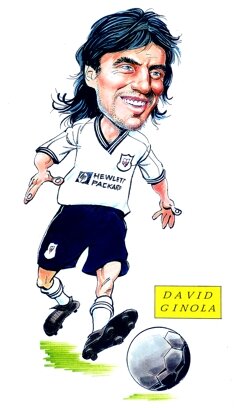
Gerry Francis signed David Ginola from Newcastle United to add skill and excitement to the Spurs team.


He became a firm favourite at White Hart Lane and this game marked his first appearance in a Spurs shirt. He played for the last twenty five minutes when he replaced that other former Newcastle favourite Ruel Fox.


Not fully fit, it took time for Ginola to lose some weight and get match fit but his performances brought excitement to the games and spectacular goals and in his second season as well as being a member of the Worthington Cup winning team he was the ‘Double’ Footballer of the Year.

Google


Saturday, April 14, 2007

Spurs and the FA Cup Semi-Finals

Spurs and the FA Cup

Semi-Finals - 1901 – 2010
It is now over twenty years since Tottenham last enjoyed the celebrations of winning an FA Cup semi-final.  There have been many trials and tribulations in that time but Spurs have fallen short at that vital stage even when firm favourites as in 2010 against Portsmouth.  In their lengthy history Spurs have reached this stage of the competition on eighteen occasions, winning on nine occasions and for most of those successes the result was well deserved with Spurs winning comfortably. However, of the nine unsuccessful attempts to reach the Final, there has often been a sense of injustice as Spurs have been at the wrong end of some dubious decisions.

As a Southern League side Spurs had progressed to the 1901 FA Cup semi-final having disposed of the Cup holders, Bury, and the only other surviving non-League side, Reading, in previous rounds. First Division, West Bromwich Albion at Villa Park were Spurs next opponents while Sheffield United and Aston Villa contested the other semi-final. Although the game was like a home game for Albion, Spurs took thousands of spectators to the Birmingham venue.

The Spurs’ hero was Sandy Brown who scored all four goals as Spurs won comprehensively. Brown had scored in every round of the Cup and now had a total of twelve goals in the competition. Spurs were very much the under-dogs and all of the Spurs’ players deserved credit for this performance. Although the game was scoreless at half-time Spurs had more of the play and from the time that Brown headed the first goal just after the restart from a centre by John Kirwan, there was no doubting the result. He scored twice more in the next twenty minutes – his second from a corner, the third was a shot from thirty yards and the fourth, five minutes from the end, after a passing movement took Spurs the length of the pitch.

Following a replay Spurs discovered they would be meeting Sheffield United in the Final to be played at Crystal Palace.

Twenty years later, just back in the 1st Division, Spurs faced Preston North End at Hillsborough in their second semi-final. The two clubs had previously met in the Cup on two occasions, including the 1st Round tie in 1901 when Spurs went on to win the Cup for the first time. Now, the two clubs were opponents in the top flight and although Preston were in the bottom half of the League to Spurs sixth position, the northern club had been successful in both League games earlier in the season. Spurs had had moments of good fortune in their early progress in the Cup but on this occasion it seemed to desert them. It took two goals from Bert Bliss in the second half to ensure Spurs’ victory – scoring the first with a typical drive and then converting a pass from captain, Arthur Grimsdell. A mix-up in the Spurs’ defence allowed Preston to pull a goal back but Spurs were never under any threat. The game could and should have been wrapped long before Spurs scored their first goal. In the first half they had two goals disallowed – the first after Jimmy Banks scored but the referee gave Spurs a free-kick for a foul on Jimmy Seed and then a second following a scramble in the Preston area was disallowed for some unknown reason. Early in the second half Spurs should have had two penalties – firstly for a foul on Banks and then when a Preston defender handled but neither impressed the referee.

Spurs’ opponents in the Final at Stamford Bridge would be Second Division Wolverhampton Wanderers who had defeated another Second Division side, Cardiff City in a replay.

The following year and Spurs suffered their first semi-final defeat, Preston gaining revenge for the previous year’s defeat in controversial circumstances. Spurs were favourites to win and played in that manner throughout the first half and went a goal up through Jimmy Seed. Preston looked a beaten team at half-time but in the second half were re-vitalised and equalised. Spurs came back into the game and looked to have scored when a shot from Bert Bliss beat the goalkeeper and was on its way into the net. At this point the referee stopped the game to attend to an injured Preston player. He decreed that he had blown the whistle before the ball entered the net and disallowed the goal. To add insult to injury, the player wasn’t even injured. This decision demoralised the Spurs players and Preston went on to score the winning goal. In the Final Preston lost to a disputed penalty, awarded for a foul committed outside the area, but that is of little consolation to Spurs.

It was another twenty six years before Spurs were to grace a semi-final again and it was as a 2nd Division side that they met 1st Division Blackpool at Villa Park. They had defeated 1st Division Bolton and then 2nd Division clubs, West Brom, Leicester and Southampton to reach this stage. For over an hour Spurs were the equal of Blackpool who were the strong favourites with Stanley Matthews and Stan Mortensen in their side. However, it was Spurs who went ahead when Len Duquemin got the final touch in a goalmouth scramble for his eighth Cup goal of the season. Time ticked away and Spurs were within four minutes of their first Wembley final when a pass from Matthews found Mortensen. He set off on a thirty yard run, past four defenders and shot from a very acute angle near the goal line. The shot caught Ted Ditchburn unawares and Spurs were totally deflated. Into extra time and Mortensen scored twice more to ensure Spurs’ Cup dreams ended at Villa Park. That result so demoralised Spurs that they won only two of their final twelve League games and missed out on a possible promotion by finishing in eighth place.

Five seasons later, Spurs had an opportunity to gain revenge on Blackpool when they again met in the semi-final at Villa Park. This time both clubs were in the 1st Division and this was seen as a last opportunity for the ‘Push and Run’ side to achieve Cup success. It had been a long road to the semi-final for Spurs who had played eight games to reach this stage. They had needed replays to beat Tranmere and Preston, then one game saw off Halifax but the 6th Round tie with Birmingham City went to three games. This time Blackpool with Matthews and Mortensen still a force to be reckoned with, took an early lead but early in the second half Spurs levelled through Len Duquemin. Spurs were now in control and the game was heading for extra time when with seconds remaining Alf Ramsey attempted a back pass to Ted Ditchburn. As he did so he slipped and the ball fell short allowing the Blackpool forward to step in and put the ball past Ditchburn. Only time remained to kick off again and Spurs would have to wait a little longer for a final at Wembley.

Blackpool went on to win the Final against Bolton in the famous ‘Matthews’ final.

Villa Park was becoming a bogey ground for Spurs where FA Cup semi-final games were concerned. In 1955-56 they again had the misfortune to lose there at the penultimate stage – this time to Manchester City. It was a refereeing mistake that helped to prevent Spurs achieving that first Wembley final. Spurs were a goal down but in the final minutes were battling for an equaliser. The captain, Danny Blanchflower had moved centre half, Maurice Norman, forward into the attack as he had done successfully in the previous round against West Ham. In the dieing moments winger George Robb was through on goal and about to score when the Manchester City goalkeeper, Bert Trautmann, caught hold of his legs. A goal or a penalty, Spurs should have scored but somehow unbelievably the officials saw nothing and Spurs had once again fallen short. ‘What if’ Spurs had scored – they could have taken the game into extra time and gone on to win but the repercussions of the defeat went further than expected. Manager, Jimmy Anderson was unimpressed with Blanchflower’s decision to make changes to the team during the game and in the ensuing row Blanchflower resigned as captain and did not take on the role for another two seasons.

After such a period of disappointment, Spurs were about to embark on a sequence of seven successive semi-final victories stretching over thirty years. At the fourth attempt, it was the ‘Double’ team of 1960-61 that was to lay the ghost of Villa Park. Drawn to play defending League champions Burnley a tight game was expected as Burnley had recovered from a four goal deficit to earn a draw in the League game at White Hart Lane earlier in the season. The semi-final tie saw Spurs take the lead after half an hour and went further ahead when Bobby Smith scored his second in the second half. This deflated Burnley and Cliff Jones added the third before the end. Spurs were on their now way to Wembley for the very first time where they would find Leicester City trying to prevent them completing an historic ‘Double.’

A year later Spurs overcame Manchester United at Hillsborough at the semi-final stage of the competition as they endeavoured to retain the trophy. Goals from Jimmy Greaves, Terry Medwin and Cliff Jones ensured that Spurs won comfortably and returned to Wembley to meet the team they defeated in the previous year’s semi-final. Greaves and Jones gave Spurs a two goal half-time lead. United scored with seven minutes remaining but Medwin ensured Spurs’ victory, scoring three minutes later.

The 1967 semi-final saw Spurs return to Hillsborough to play Nottingham Forest. Both teams were in the top three of the League and Spurs were on an unbeaten run that stretched back to mid-January. In a very close game Forest started the better and Cyril Knowles cleared off the line early on but then after half an hour Jimmy Greaves scored with a great volley from twenty five yards that went in off the post. Just before half-time Forest almost equalised when a Knowles defensive header hit the post but Spurs held on. In the second half Forest continued to search for the equaliser but when Frank Saul caught a Forest defender in possession he took the ball to the edge of the penalty area to score with a great shot to put Spurs two up after sixty seven minutes. Forest weren’t down and out and scored with ten minutes left but although they searched for the equaliser, Spurs had further opportunities to increase their lead. In the following day’s papers the match was described as ‘pulsating’ and a game in which Spurs ‘earned the right to meet Chelsea in the first all London Final at Wembley on the strength of a highly skilled performance in a classic semi-final that had moments of magic and tragedy.’

Although Spurs enjoyed Cup success at home and in Europe over the next decade and a half, the FA Cup eluded them. It was in 1981 that they next reached an FA Cup semi-final, under the guidance of Keith Burkinshaw. Spurs’ progress to this stage had been steady and they were drawn to play Wolverhampton Wanderers at Hillsborough. Everyone’s memory of this game is the penalty that was awarded to Wolves in the dieing moments for a tackle by Glenn Hoddle. This gave Wolves the chance to equalise and take the game into extra time. The game remained level at 2-2 and a replay was required. The fury of the Spurs’ players and spectators at the penalty decision is understandable as it was wrong on two accounts – the tackle was outside the penalty area and Hoddle won the ball cleanly without touching the ‘diving’ Terry Hibbitt. Spurs had taken the lead through Steve Archibald after four minutes but Wolves equalised a minute later. Just before half-time, Hoddle put Spurs ahead from a free kick, that could justifiably have been a penalty. Spurs defended resolutely until the referee played his part but then we would have missed the excitement of the replay at Highbury.

For some unaccountable reason the FA decided that the replay would take place at Highbury which was of tremendous advantage to Spurs. It was the perfect place for Spurs to win an exciting replay. Determined not to be deprived of their place at Wembley as they had been the previous Saturday, Spurs were fired up for the game from the outset and took an early lead when Garth Crooks headed the opening goal. Wolves came back strongly but couldn’t get an equaliser. Then just before half-time Crooks scored the second when taking a pass from Hoddle, he finished with ease. Spurs were celebrating and Ricky Villa sealed the victory with a great goal scored from thirty yards. A great victory and a stylish performance as ‘Spurs were on their way to Wembley’ again.

The following season as Spurs fought to retain the trophy, the semi-final game took them to Villa Park where they met 2nd Division, Leicester City. It was a difficult game for everyone and Ossie Ardiles played his last game of the season for Spurs as he returned to Argentina to prepare for the World Cup. However, there was the additional problem of the Falklands War and Ardiles was constantly booed by the Leicester fans. Spurs eventually wore Leicester down in the second half when after 56 minutes Ardiles centred for Crooks to score. Leicester lost a player to injury and their ten men battled gamely but in the 76th minute conceded a soft own goal. The defender with many options to clear lifted his back pass over the goalkeeper’s head. This was a very comfortable semi-final victory for Spurs who returned to Wembley for a second successive year to meet Queens Park Rangers.

Spurs next semi-final game was one of the easiest they’ve ever played at this stage of the Cup. Watford went into the game at Villa Park with goalkeeping problems and had to call up an emergency keeper as their regular keepers were injured. A 4-1 victory did not flatter Spurs as David Pleat’s side continued their good form and won through goals from Steve Hodge(2), Clive Allen and Paul Allen. Coventry City were their unexpected opponents in the Final.

In all the years of the FA Cup, Spurs and Arsenal had only previously met in the competition on two occasions. Now, in 1991, they were to meet in the semi-final. Such was the demand the game was arranged for Wembley, the first occasion that a semi-final had taken place there. Spurs were under continuing financial pressure but their biggest problem prior to this game was the fitness of their talisman, Paul Gascoigne. He had undergone a hernia operation immediately after the 6th Round win over Notts County, in the hope that he would be fit for the semi-final. Four days before the game he successfully played for an hour in a League game at Norwich and was fit to play at Wembley. Spurs’ other difficulty was that Arsenal had only lost once in the League and were looking to win the ‘double’. The atmosphere at Wembley was electric and Gascoigne was at his most exuberant best. Spurs were not expected to win this game but Venables had them firing on all cylinders from the start. After five minutes Gascoigne scored from a 35 yard free kick that was hit with such power and accuracy that it left Seaman clutching at thin air. As Venables said afterwards, “Paul was probably the only player who could do anything like that.” Five minutes later Gary Lineker increased Spurs’ lead. Arsenal didn’t know what had hit them but they managed to score before half-time. Gazza played for only sixty minutes but left to an ovation – ‘Spurs Hero of Wembley.’ Shortly after Gascoigne’s departure, his replacement, Nayim set up Lineker to score the third to take Spurs to the Final.

All the players played their part in this memorable victory as Arsenal were humbled by an inspired Gazza who ensured Spurs had a fantastic victory. ‘St. Hotspur Day’- a day never to be forgotten by Spurs’ fans around the world.
"He's not going to have a go from there.... he is you know.... that is Schoolboy's Own stuff!" Barry Davies, commenting on the semi-final as Gascoigne lined up the free-kick and scored from 35 yards.

That was Spurs’ seventh successive FA Cup semi-final victory but since that very memorable and enjoyable day, Spurs have only had that sinking feeling where those games have been concerned. Although they have endured difficult times in the subsequent years Spurs have still managed to reach the semi-final on four occasions. Two years later another visit to Wembley was required when Spurs and Arsenal were again drawn together. Terry Venables’ team were left feeling hard done by in 1993 when a refereeing decision influenced the result. Spurs were denied a penalty when Darren Anderton was brought down in the penalty area in the first half. If Spurs had been awarded a penalty and Arsenal reduced to ten men with over an hour to play the complexion of the game would have changed. However, it wasn’t and then with ten minutes remaining the Arsenal goal was scored from a dubious free-kick although tighter marking by the Spurs’ defence could have eliminated the danger. The ‘might have beens’ could go on for ever but if Spurs had gone on to Wembley and won the Cup, the subsequent dramatic and traumatic end of season events with the fall-out between Alan Sugar and Terry Venables may never have occurred and Spurs mightn’t have gone into a decade of decline.

Defeat in the semi-final usually has some repercussions – in 1947 Spurs missed out on promotion, in 1957 Blnchflower resigned as captain, in 1993 Venables and Sugar fell out while following the 1995 defeat by Everton, Spurs lost Jurgen Klinsmann who along with Teddy Sheringham had been such a vital part of Spurs’ resurgence that season. The season had started with Spurs banned from the competition as punishment for the financial irregularities uncovered in the Sugar/Venables affair. It was only as the 3rd Round approached that the decision was overturned and Spurs were re-instated. Progress to the semi-finals had brought memorable performances at Southampton and Liverpool and now Spurs were faced with Everton at Elland Road as the final step back to Wembley. The media were predicting a Spurs/Manchester United final but unfortunately Everton hadn’t read the script. Spurs were troubled by injuries on the day and Stuart Nethercott had to play as emergency left back. Spurs simply did not perform, little resembling the side that had played so well in earlier rounds and produced such exciting football during the season. Everton started the better and took a two goal lead. Klinsmann scored a penalty for Spurs but two late goals sealed Spurs’ fate and added to their embarrassment.

The result was a shattering blow to the fans and the club but the further ramification was that Klinsmann later announced that he would be leaving at the end of the season. He had brought vitality to the club but with the team not being able to offer him European football the following season he decided to return to Germany. This was an even greater blow to the Club and one that they have been striving to recover from since that fateful day – only in the past two seasons have there been signs of some early shoots of recovery.

In 1999 Spurs under George Graham had already won the Worthington Cup and were looking for a Cup ‘double’ as they took on Newcastle United at Old Trafford. Progress to this stage had been seen a comfortable victory over Watford, replays were needed to see off Wimbledon and Leeds, the latter succumbing to two spectacular goals from Anderton and Ginola at White Hart Lane. Ginola produced another ‘special’ to win at Barnsley and Spurs were looking confident as they came to play Newcastle. However, Spurs weren’t at their best against the Tyneside club but the game turned on the hour when the referee missed a blatant handball by the Newcastle defender, Dabizas, as he struggled to head clear from a free-kick. The game remained scoreless and went into extra time when from a similar situation Campbell was penalised and Newcastle were awarded a penalty. Shearer scored and with Spurs deflated, added a second to end Spurs’ dreams of a second visit to Wembley.

In 2001, Spurs had another opportunity to reach the FA Cup Final but once again Arsenal stood in their way. In the entire history of the FA Cup, the two clubs have only met on two occasions in earlier rounds of the competition but of the four times they have both reached the semi-finals, they have been drawn together on three occasions. The background to the tie was Spurs’ change of manager. A week after Spurs’ thrilling victory over West Ham United at Upton Park in the 6th Round George Graham was sacked. David Pleat took temporary charge while the club waited for Glenn Hoddle whose first game in charge was the semi-final at Old Trafford. It started brightly for Spurs with Gary Doherty who had been the hero of earlier rounds with two important goals, giving Spurs the lead. However, Arsenal came more and more into the game and it was only an outstanding display by Neil Sullivan in the Spurs’ goal that kept the score to 2-1 for Spurs’ north London neighbours. While Hoddle’s return to Tottenham was welcome, the timing was not the most appropriate, before such an important game and especially as the players had come together as a team through the Cup run.

Spurs last reached the semi-final stage in 2010 when they faced Portsmouth.  The south coast club were in dire straits facing both relegation and financial problems.  Spurs had defeated Harry Redknapp's old club in both Premier League matches, the last game only a few weeks previously had been an extremely comfortable victory at White Hart Lane.  In the semi-final Portsmouth worked extremely hard throughout and Spurs simply couldn't respond or lift their game.  The game went into extra time and was looking destined for penalties when Portsmouth's goal came courtesy of a Michael Dawson slip on the much criticised new Wembley turf.  He slipped at a vital moment as he was about to clear the ball in the centre of the penalty area.  The ball fell invitingly for Portsmouth who accepted the gift and went on to secure a two goal victory and Spurs felt annoyed with the performance of their team and officials who ruled out both a goal and penalty claims in extra time.  Spurs showed remarkable powers of recovery from this very disappointing performance to produce a run to gain Champions League football for the first time.

Spurs haven't had a successful semi-final since 1991which is a very long period for a club with a Cup reputation but whether this year will be any different is hard to judge with the quest for Champions League football so often taking precedent over the glory of winning the Cup.

The story of the FA Cup, season after season brings dreams that ultimately go unfulfilled but on those few occasions when it all falls into place they are the greatest moments and create lasting memories that carry you through in hope for the seasons that lie ahead.

For the Record:
Tottenham's FA Cup Semi-Final Win and Loss Account:
1901 West Bromwich Albion (Villa Park) Won 4-0 Brown (4)
1921 Preston North End (Hillsborough) Won 2-1 Bliss (2)

 1922 Preston North End (Hillsborough) Lost 1-2 Seed
1948 Blackpool (Villa Park) Lost 1-3 (aet) Duquemin
1953 Blackpool (Villa Park) Lost 1-2 Duquemin
1956 Manchester City (Villa Park) Lost 0-1 
1961 Burnley (Villa Park) Won 3-0 Smith R (2), Jones
1962 Manchester United (Hillsborough) Won 3-1 Greaves, Medwin, Jones 

1967 Nottingham Forest (Hillsborough) Won 2-1 Greaves, Saul
1981 Wolverhampton Wanderers (Hillsborough) Draw 2-2 (aet) Archibald, Hoddle
Replay Wolverhampton Wanderers (Highbury) Won 3-0 Crooks (2), Villa

1982 Leicester City (Villa Park) Won 2-0 Crooks, Opp. o.g.
1987 Watford (Villa Park) won 4-1 Hodge (2), Allen P, Allen C 

1991 Arsenal (Wembley) Won 3-1 Gascoigne, Lineker (2) 
1993 Arsenal (Wembley) Lost 0-1
1995 Everton (Elland Road) Lost 1-4 Klinsmann (p)
1999 Newcastle United (Old Trafford) Lost 0-2 (aet)
 2001 Arsenal (Old Trafford) Lost 1-2 Doherty
2010 Portsmouth (Wembley) Lost 0 - 2 (aet)


Google