Showing posts with label Manchester City. Show all posts

Thursday, May 10, 2012

Tottenham - Final Home Match of the Season

For many seasons for younger Tottenham supporters, the final home match and the last game of the season have had little importance for Spurs.  Safely ensconced in mid-table, it was just another match to be played to bring the season to a close with nothing at stake.  For the past few seasons, however, with Spurs' improving status there has been something to play for and this weekend's home game with Fulham has the greatest importance of any final match played at White Hart Lane for some considerable time. 

The result of Sunday's match against Fulham, not to overstate its importance, could determine Spurs' future direction for years to come.  A third place finish with automatic Champions League qualification will allow immediate planning for the coming season to commence - current players will be less inclined to fall into the snare of other clubs while Tottenham would be a more attractive proposition for prospective players.  The plans for the development of the new ground would have a greater chance of progressing and attracting the financial backers and sponsors which are required for Daniel Levy to finally give it the green light.  Any other finish, even fourth, would bring with it certain restraints which would cause delay - Chelsea winning the Champions League and thus missing out on the competition, dropping into the Europa League for another season would be less appealing to current and future players and create a less profitable financial situation.  The knock-on effect for attracting sponsorship would be similar so Sunday's result is crucial for the club.

It has not always been so, as the last home game of the season approached.  Frequently, it has been the opposition who have had more to play for and for some White Hart Lane was a good place to visit.  In 1996-97, Coventry City were the visitors and their 2 - 1 victory ensured their Premier League survival by  a single point, condemning Sunderland and Middlesbrough with already relegated Nottingham Forest.  A young Northern Ireland player, Paul McVeigh, scored Spurs' goal in what was his third and final appearance for the club.  He remained with Tottenham until March, 2000 when he was given a free transfer and signed for Norwich City.  He made twenty appearances for Northern Ireland, making his debut while with Spurs and then made over 200 appearances for Norwich.

May, 2011
Tottenham 2 Birmingham City 1  Pavlyuchenko (2)  [Final place finish: 5th]
Last season's final game of the season was important for Birmingham who were looking to avoid relegation while Spurs could ensure Europa League qualification.  In the end results elsewhere determined the outcome of both situations.  Liverpool's defeat meant Spurs were in Europe while a Wolves' recovery guaranteed their safety and had relegated Birmingham even before Roman Pavlyuchenko scored the second of his two goals in the final minute.

May, 2010
Tottenham 1 Bolton Wanderers 0  Huddlestone   [Final place finish: 4th]
With two away games to follow, it was essential that Spurs won to maintain their pursuit of fourth place.  Tom Huddlestone's thunderbolt of a drive in the first half ensured that Tottenham remained in pole position ahead of their vital head-to-head clash with Manchester City to secure Champions league qualification.  Peter Crouch's goal in Manchester four days later brought that dream to reality.

May, 2009
Tottenham 2 Manchester City 1  Defoe, Keane (p)  [Final place finish: 8th]
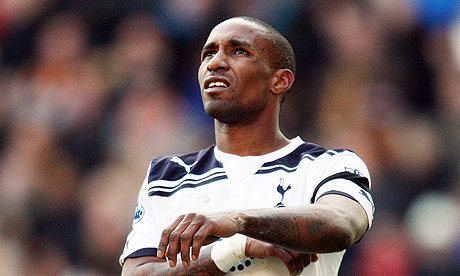
Having battled for survival after a nightmare start to the season, Harry Redknapp in his first season at White Hart Lane had lifted the club to safety with an outside chance of making the Europa League.  This win over City maintained that prospect but a final day defeat at Anfield brought it to an end.  Jermain Defoe gave Spurs an early lead but City drew level midway through the second half.  Robbie Keane secured victory with a penalty four minutes from time.

May, 2008
Tottenham 0 Liverpool 2  [Final place finish: 11th]
Having won the Carling Cup at the end of February, Juande Ramos' team sleep walked through the rest of the season to finish eleventh.  Liverpool brought the final rites to the season with two second half goals in what was a disappointing performance from Spurs.

May, 2007
Tottenham 2 Manchester City 1  Keane, Berbatov  [Final place finish: 5th]   
Spurs ensured their qualification for the UEFA Cup with a fifth place finish for the second successive season under Martin Jol.  They scored two first half goals from Keane and Dimitar Berbatov but allowed City to pull one back before the interval but then held on throughout the second period to claim the points.

April, 2006
Tottenham 1 Bolton Wanderers 0  Lennon  [Final place finish: 5th]
Aaron Lennon's goal after an hour maintained Spurs' hold on fourth place as they faced stiff competition from Arsenal for the final place for Champions League qualification.  Spurs had been fourth since November but it would go down to the final games the next weekend when Spurs travelled across London to face West Ham United.  As we all know, 'Lasagne-gate' became headlines as a sickly Tottenham played out the game with an ailing team who were clearly unwell.  Spurs lost, Arsenal won and Tottenham fans had to wait another until 2010 for their first experience of the Champions League.

May, 2005
Tottenham 0 Blackburn Rovers 0  [Final place finish: 9th]
Spurs had an outside chance of European qualification but it had really been lost the previous weekend with a single goal defeat at Middlesbrough.  A stubborn Rovers team came to deny Tottenham and they succeeded.

It was Atrocious
May, 2003
Tottenham 0 Blackburn Rovers 4  [Final place finish: 10th]
This wasn't how it wa ssupposed to be when Glenn Hoddle took over as manager.  Spurs had lost 1 - 5 the previous week at Middlesbrough and brought the season to a close in front of clearly dissatisfied and disgruntled supporters at White Hart Lane.  It was Teddy Sheringham's final game for the club but there was nothing to commend about the performance which saw Gus Poyet sent off and Blackburn score twice in each half.  There were calls for Hoddle to go and it wasn't long into the new season before he departed.

It was a Celebration!
May, 1977
Tottenham 2 Leicester City 0  Pratt, Holmes  [Final place finish: 22nd - Relegation]
Spurs' relegation had been determined the previous weekend in a five goal defeat at Manchester City.  The team threw off their fears and gave the fans something to cheer in the final match with goals from John Pratt and Jimmy Holmes.  The team included Pat Jennings for whom it would be his last League appearance for the club, Steve Perryman, Glenn Hoddle and Peter Taylor.  The fans showed their loyalty to the club as they prepared for a step into the unknown - a year in the 2nd Division.


It was Tense!!
April, 1978
Tottenham 1 Hull City 0  Perryman  [Final place finish: 3rd - Promotion]
One year on and Tottenham experienced a very tense evening at White Hart Lane.  Spurs promotion had seemed secure earlier in the season but two successive defeats left them in danger of missing out.  A late goal scored by captain, Steve Perryman, secured the points and they lived to fight another day - a final day visit to Southampton who were also in the battle for promotion.  A tense scoreless draw gave both clubs promotion, Tottenham at the expense of Brighton on goal difference.


Sunday's match against Fulham is sure to be tense but hopefully, Spurs will come through and if results elsewhere go in their favour, the supporters will have plenty to celebrate - another crack at the Champions League.


Google

Thursday, April 12, 2012

Spurs and the FA Cup Semi-Finals

It is now over twenty years since Tottenham last enjoyed the celebrations of winning an FA Cup semi-final.  There have been many trials and tribulations in that time but Spurs have fallen short at that vital stage even when firm favourites as in 2010 against Portsmouth.  In their lengthy history Spurs have reached this stage of the competition on eighteen occasions, winning on nine occasions and for most of those successes the result was well deserved with Spurs winning comfortably. However, of the nine unsuccessful attempts to reach the Final, there has often been a sense of injustice as Spurs have been at the wrong end of some dubious decisions. 

Spurs and the FA Cup

Semi-Finals 1901 – 2010
Spurs FA Cup Semi-Final Record
As a Southern League side Spurs had progressed to the 1901 FA Cup semi-final having disposed of the Cup holders, Bury, and the only other surviving non-League side, Reading, in previous rounds. First Division, West Bromwich Albion at Villa Park were Spurs next opponents while Sheffield United and Aston Villa contested the other semi-final.  Although the game was like a home game for Albion, Spurs took thousands of spectators to the Birmingham venue.

The Spurs’ hero was Sandy Brown who scored all four goals in a comprehensive win.  Brown had scored in every round of the Cup and now had a total of twelve goals in the competition.  Spurs were very much the under-dogs and all of the Spurs’ players deserved credit for this performance. Although the game was scoreless at half-time Spurs had more of the play and from the time that Brown headed the first goal just after the restart from a centre by John Kirwan, there was no doubting the result.  He scored twice more in the next twenty minutes – his second from a corner, the third was a shot from thirty yards and the fourth, five minutes from the end, after a passing movement took Spurs the length of the pitch.

Following a replay Spurs discovered they would be meeting Sheffield United in the Final to be played at Crystal Palace.

Twenty years later, just back in the 1st Division, Spurs faced Preston North End at Hillsborough in their second semi-final.  The two clubs had previously met in the Cup on two occasions, including the 1st Round tie in 1901 when Spurs went on to win the Cup for the first time.  Now, the two clubs were opponents in the top flight and although Preston were in the bottom half of the League to Spurs sixth position, the northern club had been successful in both League games earlier in the season.  Spurs had had moments of good fortune in their early progress in the Cup but on this occasion it seemed to desert them.  It took two goals from Bert Bliss in the second half to ensure Spurs’ victory – scoring the first with a typical drive and then converting a pass from captain, Arthur Grimsdell.  A mix-up in the Spurs’ defence allowed Preston to pull a goal back but Spurs were never under any threat.  The game could and should have been wrapped long before Spurs scored their first goal.  In the first half they had two goals disallowed – the first after Jimmy Banks scored but the referee gave Spurs a free-kick for a foul on Jimmy Seed and then a second following a scramble in the Preston area was disallowed for some unknown reason.   Early in the second half Spurs should have had two penalties – firstly for a foul on Banks and then when a Preston defender handled but neither impressed the referee.

Spurs’ opponents in the Final at Stamford Bridge would be Second Division Wolverhampton Wanderers who had defeated another Second Division side, Cardiff City in a replay.

The following year, in 1922, Spurs suffered their first semi-final defeat, Preston gaining revenge for the previous year’s defeat in controversial circumstances.  Spurs were favourites to win and played in that manner throughout the first half and went a goal up through Jimmy Seed.  Preston looked a beaten team at half-time but in the second half were re-vitalised and equalised.  Spurs came back into the game and looked to have scored when a shot from Bert Bliss beat the goalkeeper and was on its way into the net.  At this point the referee stopped the game to attend to an injured Preston player.  He decreed that he had blown the whistle before the ball entered the net and disallowed the goal.  To add insult to injury, the player hadn't been seriously injured.  This decision demoralised the Spurs players and Preston went on to score the winning goal.  In the Final Preston lost to a disputed penalty, awarded for a foul committed outside the area, but that is of little consolation to Spurs.

It was another twenty six years before Spurs were to grace a semi-final again and it was as a 2nd Division side that they met 1st Division Blackpool at Villa Park in 1947-48.  They had defeated 1st Division Bolton and then 2nd Division clubs, West Bromwich, Leicester and Southampton to reach this stage.  For over an hour Spurs were the equal of Blackpool who were the strong favourites with Stanley Matthews and Stan Mortensen in their side.  It was Spurs, however, who went ahead when Len Duquemin got the final touch in a goalmouth scramble for his eighth Cup goal of the season. Time ticked away and Spurs were within four minutes of their first Wembley final when a pass from Matthews found Mortensen.  He set off on a thirty yard run, past four defenders and shot from a very acute angle near the goal line. The shot caught Ted Ditchburn unawares and Spurs were totally deflated.   Into extra time and Mortensen scored twice more to ensure Spurs’ Cup dreams ended at Villa Park.   That result so demoralised Spurs that they won only two of their final twelve League games and missed out on a possible promotion by finishing in eighth place.

Five seasons later, Spurs had an opportunity to gain revenge on Blackpool when they again met in the semi-final at Villa Park.  This time both clubs were in the 1st Division and this was seen as a last opportunity for the ‘Push and Run’ side to achieve Cup success.   It had been a long road to the semi-final for Spurs who had played eight games to reach this stage.  They had needed replays to beat Tranmere and Preston, then one game saw off Halifax but the 6th Round tie with Birmingham City went to three games.  This time Blackpool with Matthews and Mortensen still a force to be reckoned with, took an early lead but early in the second half Spurs levelled through Len Duquemin.  Spurs were now in control and the game was heading for extra time when with seconds remaining Alf Ramsey attempted a back pass to Ted Ditchburn.  As he did so, he slipped and the ball fell short allowing the Blackpool forward to step in and score past Ditchburn.  Only time remained to kick off again and Spurs would have to wait a little longer for a final at Wembley.

Blackpool went on to win the Final against Bolton in the famous ‘Matthews’ final.

Villa Park was becoming a bogey ground for Spurs where FA Cup semi-final games were concerned. In 1955-56 they again had the misfortune to lose there at the penultimate stage – this time to Manchester City.  It was a refereeing mistake that helped to prevent Spurs achieving that first Wembley final.  Spurs were a goal down but in the final minutes were battling for an equaliser.   The captain, Danny Blanchflower had moved centre half, Maurice Norman, forward into the attack as he had done successfully in the previous round against West Ham.  In the dieing moments winger George Robb was through on goal and about to score when the Manchester City goalkeeper, Bert Trautmann, caught hold of his legs.  A goal or a penalty, Spurs should have scored but somehow, unbelievably, the officials saw nothing and Spurs had once again fallen short.  ‘What if’ Spurs had scored – they could have taken the game into extra time and gone on to win but the repercussions of the defeat went further than expected.  The Spurs manager, Jimmy Anderson, was unimpressed with Blanchflower’s decision to make changes to the team during the game and in the ensuing row Blanchflower resigned as captain and did not take on the role for another two seasons.

After such a period of disappointment, Spurs were about to embark on a sequence of seven successive semi-final victories stretching over thirty years.  At the fourth attempt, it was the ‘Double’ team of 1960-61 that was to lay the ghost of Villa Park.  Drawn to play defending League champions Burnley a tight game was expected as Burnley had recovered from a four goal deficit to earn a draw in the League game at White Hart Lane earlier in the season.  The semi-final tie saw Spurs take the lead after half an hour and went further ahead when Bobby Smith scored his second in the second half.  This deflated Burnley and Cliff Jones added the third before the end.   Spurs were on their way to Wembley for the first time where they would find Leicester City trying to prevent them completing an historic ‘Double.’

A year later Spurs overcame Manchester United at Hillsborough at the semi-final stage of the competition as they endeavoured to retain the trophy.  Goals from Jimmy Greaves, Terry Medwin and Cliff Jones ensured that Spurs won comfortably and returned to Wembley to meet the team they defeated in the previous year’s semi-final.  Greaves and Jones gave Spurs a two goal half-time lead. United scored with seven minutes remaining but Medwin ensured Spurs’ victory, scoring three minutes later.

The 1967 semi-final saw Spurs return to Hillsborough to play Nottingham Forest. Both teams were in the top three of the League and Spurs were on an unbeaten run that stretched back to mid-January.  In a very close game Forest started the better and Cyril Knowles cleared off the line early on but then after half an hour Jimmy Greaves scored with a great volley from twenty five yards that went in off the post.  Just before half-time Forest almost equalised when a Knowles defensive header hit the post but Spurs held on.  In the second half Forest continued to search for the equaliser but when Frank Saul caught a Forest defender in possession he took the ball to the edge of the penalty area to score with a great shot to put Spurs two up after sixty seven minutes.  Forest weren’t down and out and scored with ten minutes left but although they searched for the equaliser, Spurs had further opportunities to increase their lead. In the following day’s papers the match was described as ‘pulsating’ and a game in which Spurs ‘earned the right to meet Chelsea in the first all London Final at Wembley on the strength of a highly skilled performance in a classic semi-final that had moments of magic and tragedy.’

Although Spurs enjoyed Cup success at home and in Europe over the next decade and a half, the FA Cup eluded them.  It was in 1981 that they next reached an FA Cup semi-final, under the guidance of Keith Burkinshaw. Spurs’ progress to this stage had been steady and they were drawn to play Wolverhampton Wanderers at Hillsborough.  Everyone’s memory of this game is the penalty that was awarded to Wolves in the dieing moments for a tackle by Glenn Hoddle.  This gave Wolves the chance to equalise and take the game into extra time.  The game remained level at 2-2 and a replay was required. The fury of the Spurs’ players and spectators at the penalty decision is understandable as it was wrong on two accounts – the tackle was outside the penalty area and Hoddle won the ball cleanly without touching the ‘diving’ Terry Hibbitt.  Spurs had taken the lead through Steve Archibald after four minutes but Wolves equalised a minute later.  Just before half-time, Hoddle put Spurs ahead from a free kick, that could justifiably have been a penalty.  Spurs defended resolutely until the referee played his part but then we would have missed the excitement of the replay at Highbury.

For some unaccountable reason the FA decided that the replay would take place at Highbury which was a tremendous advantage to Spurs. It was the perfect place for Spurs to win an exciting replay. Determined not to be deprived of their place at Wembley as they had been the previous Saturday, Spurs were fired up for the game from the outset and took an early lead when Garth Crooks headed the opening goal. Wolves came back strongly but couldn’t get an equaliser.  Then just before half-time Crooks scored the second when taking a pass from Hoddle, he finished with ease.   Spurs were celebrating and Ricky Villa sealed the victory with a great goal scored from thirty yards.  A great victory and a stylish performance as ‘Spurs were on their way to Wembley’ again.

The following season as Spurs fought to retain the trophy, the semi-final game took them to Villa Park where they met 2nd Division, Leicester City.  It was a difficult game for everyone and Ossie Ardiles played his last game of the season for Spurs as he returned to Argentina to prepare for the World Cup.  However, there was the additional problem of the Falklands War and Ardiles was constantly booed by the Leicester fans.  Spurs eventually wore Leicester down in the second half when after 56 minutes Ardiles centred for Crooks to score.   Leicester lost a player to injury and their ten men battled gamely but in the 76th minute conceded a soft own goal.  The defender with many options to clear lifted his back pass over the goalkeeper’s head.  This was a very comfortable semi-final victory for Spurs who returned to Wembley for a second successive year to meet Queens Park Rangers.

Spurs next semi-final game was one of the easiest they’ve ever played at this stage of the Cup. Watford went into the game at Villa Park with goalkeeping problems and had to call up an emergency keeper as their regular keepers were injured.   A 4-1 victory did not flatter Spurs as David Pleat’s side continued their good form and won through goals from Steve Hodge(2), Clive Allen and Paul Allen. Coventry City were their unexpected opponents in the Final.

In all the years of the FA Cup, Spurs and Arsenal had only previously met in the competition on two occasions.   Now, in 1991, they were to meet in the semi-final.   Such was the demand for tickets that the game was arranged for Wembley, the first occasion that a semi-final had taken place there.  Spurs were under continuing financial pressure but their biggest problem prior to this game was the fitness of their talisman, Paul Gascoigne.  He had undergone a hernia operation immediately after the 6th Round win over Notts County, in the hope that he would be fit for the semi-final.  Four days before the game he successfully played for an hour in a League game at Norwich and was fit to play at Wembley.  Spurs’ other difficulty was that Arsenal had only lost once in the League and were looking to win the ‘Double’.  The atmosphere at Wembley was electric and Gascoigne was at his most exuberant best.  Spurs were not expected to win this game but Venables had them firing on all cylinders from the start.  After five minutes Gascoigne scored from a 35 yard free kick that was hit with such power and accuracy that it left Seaman clutching at thin air.   As Venables said afterwards, “Paul was probably the only player who could do anything like that.”  Five minutes later Gary Lineker increased Spurs’ lead.  Arsenal didn’t know what had hit them but they managed to score before half-time.  Gazza played for only sixty minutes but left to an ovation – ‘Spurs Hero of Wembley.’  Shortly after Gascoigne’s departure, his replacement, Nayim set up Lineker to score the third to take Spurs to the Final.

All the players played their part in this memorable victory as Arsenal were humbled by an inspired Gazza who ensured Spurs had a fantastic victory.  ‘St. Hotspur Day’- a day never to be forgotten by Spurs’ fans around the world nor will the words of Barry Davies, commenting on the semi-final as Gascoigne lined up the free-kick, "He's not going to have a go from there.... he is you know.... that is Schoolboy's Own stuff!"

That was Spurs’ seventh successive FA Cup semi-final victory but since that very memorable and enjoyable day, Spurs have only had that sinking feeling where those games have been concerned. Although they have endured difficult times in the subsequent years Spurs have still managed to reach the semi-final on five occasions.  Two years later another visit to Wembley was required when Spurs and Arsenal were again drawn together.   Terry Venables’ team were left feeling hard done by in 1993 when a refereeing decision influenced the result.  Spurs were denied a penalty when Darren Anderton was brought down in the penalty area in the first half.  If Spurs had been awarded a penalty and Arsenal reduced to ten men with over an hour to play the complexion of the game might have been different.   it wasn’t, however, and then with ten minutes remaining the Arsenal goal was scored from a dubious free-kick although tighter marking by the Spurs’ defence could have eliminated the danger. The ‘might have beens’ could go on for ever but if Spurs had gone on to Wembley and won the Cup, the subsequent dramatic and traumatic end of season events with the fall-out between Alan Sugar and Terry Venables may never have occurred and Spurs mightn’t have gone into a decade of decline.

Defeat in the semi-final usually has some repercussions – in 1947 Spurs missed out on promotion, in 1957 Blanchflower resigned as captain, in 1993 Venables and Sugar fell out while following the 1995 defeat by Everton, Spurs lost Jurgen Klinsmann who along with Teddy Sheringham had been such a vital part of Spurs’ resurgence that season.  The season had started with Spurs banned from the competition as punishment for the financial irregularities uncovered in the Sugar/Venables affair.  It was only as the 3rd Round approached that the decision was overturned and Spurs were re-instated. Progress to the semi-finals had brought memorable performances at Southampton and Liverpool and now Spurs were faced with Everton at Elland Road as the final step back to Wembley.   The media were predicting a Spurs/Manchester United final but unfortunately Everton hadn’t read the script. Spurs were troubled by injuries on the day and Stuart Nethercott had to play as emergency left back. Spurs simply did not perform, little resembling the side that had played so well in earlier rounds and produced such exciting football during the season.  Everton started the better and took a two goal lead.  Klinsmann scored a penalty for Spurs but two late goals sealed Spurs’ fate and added to their embarrassment.

The result was a shattering blow to the fans and the club but the further ramification was that Klinsmann later announced that he would be leaving at the end of the season.  He had brought vitality to the club but with the team not being able to offer him European football the following season he decided to return to Germany.  This was an even greater blow to the Club and one that they have been striving to recover from since that fateful day – only in recent seasons has there been a recovery in Spurs status and expectations.

In 1999 Spurs under George Graham had already won the Worthington Cup and were looking for a Cup ‘double’ as they took on Newcastle United at Old Trafford.  Progress to this stage had been seen a comfortable victory over Watford, replays were needed to see off Wimbledon and Leeds, the latter succumbing to two spectacular goals from Anderton and Ginola at White Hart Lane.  Ginola produced another ‘special’ to win at Barnsley and Spurs were looking confident as they came to play Newcastle.  They weren’t, however, at their best against the Tyneside club but the game turned on the hour when the referee missed a blatant handball by the Newcastle defender, Dabizas, as he struggled to head clear from a free-kick. The game remained scoreless and went into extra time when from a similar situation Campbell was penalised and Newcastle were awarded a penalty.   Shearer scored and with Spurs deflated, added a second to end Spurs’ dreams of a second visit to Wembley.

In 2001, Spurs had another opportunity to reach the FA Cup Final but once again Arsenal stood in their way.  In the entire history of the FA Cup, the two clubs have only met twice in earlier rounds of the competition but on the four occasions that both clubs have reached the semi-finals, they have been drawn together three times.  The background to the tie was Spurs’ change of manager.  A week after Spurs’ thrilling victory over West Ham United at Upton Park in the 6th Round George Graham was sacked.  David Pleat took temporary charge while the club waited for Glenn Hoddle whose first game in charge was the semi-final at Old Trafford.  It started brightly for Spurs with Gary Doherty who had been the hero of earlier rounds with two important goals, giving Spurs the lead.  Arsenal, however, came more and more into the game and it was only an outstanding display by Neil Sullivan in the Spurs’ goal that kept the score to 2-1 for Spurs’ north London neighbours.  While Hoddle’s return to Tottenham was welcome, the timing was not the most appropriate, before such an important game and especially as the players had come together as a team through the Cup run.

Spurs last reached the semi-final stage in 2010 when they faced Portsmouth.  The south coast club were in dire straits facing both relegation and financial problems.  Spurs had defeated Harry Redknapp's old club in both Premier League matches and the last game, only a few weeks previously, had been an extremely comfortable victory at White Hart Lane.  In the semi-final Portsmouth worked extremely hard throughout and Spurs simply couldn't respond or lift their game.  The match went into extra time and was looking destined for penalties when Portsmouth's goal came courtesy of a Michael Dawson slip on the much criticised newly laid Wembley turf.  He slipped at a vital moment as he was about to clear the ball in the centre of the penalty area.  The ball fell invitingly for Portsmouth who accepted the gift and went on to secure a two goal victory and Spurs felt annoyed with the performance of their team and officials who ruled out both a goal and penalty claims in extra time.  Spurs showed remarkable powers of recovery from this very disappointing performance to produce a run to gain Champions League football for the first time.

Spurs haven't had a successful semi-final since 1991which is a very long period for a club with a Cup reputation but this season their quest for Champions League football is being accompanied by a Cup run in the best traditions of seeking the glory of winning the Cup.

The story of the FA Cup, season after season brings dreams that ultimately go unfulfilled but on those few occasions when everything falls into place they are the greatest moments and create lasting memories that carry supporters through in hope for the seasons that lie ahead.

For the Record:
Tottenham's FA Cup Semi-Final Win and Loss Account:
1901 West Bromwich Albion (Villa Park) Won 4-0 Brown (4)
1921 Preston North End (Hillsborough) Won 2-1 Bliss (2)

 1922 Preston North End (Hillsborough) Lost 1-2 Seed
1948 Blackpool (Villa Park) Lost 1-3 (aet) Duquemin
1953 Blackpool (Villa Park) Lost 1-2 Duquemin
1956 Manchester City (Villa Park) Lost 0-1 
1961 Burnley (Villa Park) Won 3-0 Smith R (2), Jones
1962 Manchester United (Hillsborough) Won 3-1 Greaves, Medwin, Jones 

1967 Nottingham Forest (Hillsborough) Won 2-1 Greaves, Saul
1981 Wolverhampton Wanderers (Hillsborough) Draw 2-2 (aet) Archibald, Hoddle
Replay Wolverhampton Wanderers (Highbury) Won 3-0 Crooks (2), Villa

1982 Leicester City (Villa Park) Won 2-0 Crooks, Opp. o.g.
1987 Watford (Villa Park) won 4-1 Hodge (2), Allen P, Allen C 

1991 Arsenal (Wembley) Won 3-1 Gascoigne, Lineker (2) 
1993 Arsenal (Wembley) Lost 0-1
1995 Everton (Elland Road) Lost 1-4 Klinsmann (p)
1999 Newcastle United (Old Trafford) Lost 0-2 (aet)
 2001 Arsenal (Old Trafford) Lost 1-2 Doherty
2010 Portsmouth (Wembley) Lost 0-2 (aet)


Google

Sunday, January 22, 2012

Manchester City 3 Tottenham Hotspur 2

Spurs came back from conceding two goals in three minutes in the second half to draw level within six and in the second minute of added time were inches away from winning the game only for City to be awarded a match winning penalty with fifteen seconds remaining.  So nearly a great day for Spurs - a performance to be proud of but ultimately they are now eight points behind City in the title race.

City Make Spurs Pay the Penalty

Manchester City 3  Tottenham Hotspur 2
                           Scorers: Nasri, Lescott, Balotelli (p)            Defoe, Bale 

Team: Friedel; Walker, Kaboul, King, Assou-Ekotto; Lennon (Pienaar), Parker, Modric, Bale; Van der Vaart (Livermore), Defoe  Subs: (unused) Cudicini, Bassong, Dawson, Kranjcar, Pavlyuchenko

Jermain Defoe
With the match in added time my prediction that Spurs could win against Manchester City was within inches of becoming a reality only for Jermain Defoe to knock the ball wide of the far post as he stretched to reach a cross from Gareth Bale.  Then with fifteen seconds remaining Ledley King gave away Tottenham's first penalty of the season for City to win the game and increase their lead at the top of the Premier League.

Spurs had shown remarkable powers of recovery to come back from the shock of conceding two quick goals with half an hour remaining but had drawn level within six minutes and from then on looked comfortable and capable of taking all three points.

Spurs had started the game with King in central defence and Defoe replacing the ineligible Emmanuel Adebayor and throughout the first half contained City who were defending a 100% home record this season in the Premier League, having conceded only four goals.  The first half was fairly even with City quick to confront any Tottenham forward movement while Spurs tended to allow City to run with the ball before cutting out the danger as they closed in on the penalty area.  Brad Friedel was quick to come out to meet any dangerous through ball and in this game was taking more responsibility for meeting crosses and corners - punching them clear to relieve the danger.  City had spells of possession but Spurs stood up to the threat and with patience were dangerous through the pace of Bale, Aaron Lennon and Kyle Walker.  Defoe worked hard up front on his own but the team did miss the ability of Adebayor to compete for high balls and hold up possession until support arrived.

At the interval Spurs would have been the happier of the two teams although their attacking threat had been minimal but they had coped with any threat City had created.  The first fifteen minutes of the second progressed in a similar fashion but then the game came to life just before the hour.  On fifty six minutes City had possession just inside the Spurs half and this time were given too much time to pick out a pass as Silva found Nasri who had come in from the wing ahead of Walker to hammer a shot past Friedel.  

City suddenly came to life and three minutes later from a corner they reacted quicker to a ball that had been flicked on with Lescott being stronger than Scott Parker as he bundled the ball over the line.  Suddenly, memories of the game at White Hart Lane in August were resurfacing but a minute later Spurs were back in the game.

Younes Kaboul played a high ball forward out of defence and Savic misdirected his defensive header allowing Defoe to run on into the area and as Hart came out he played it past him to score from a tight angle. 

Spurs belief had been restored and they were level within five minutes as Lennon held up the ball on the left and played it across for Bale to strike a beautiful curved shot past Hart from twenty yards.  In five minutes Spurs had increased the number of goals City have conceded at home in ten games this season by 50%.  It was now time for City to have doubts.

The game continued from end to end but neither goalkeeper had a save to make and a draw looked the most likely outcome until those final agonising moments in added time. 

Spurs had been keeping possession well and in the second minute of added time hassled City into a mistake which allowed Bale to run at the defence with Defoe free to his right.  Bale put in a cross which beat the defender and goalkeeper but as Defoe stretched to reach it at the far post he could only knock it just outside the goal.  Spurs had missed a golden opportunity to take all three points. 

The match was drawing to a close but with fifteen seconds left City got the ball forward to Balotelli in the penalty area and as King challenged for the ball both players went down.  The referee could only award a penalty - the first Spurs have conceded this season.  Balotelli scored and City had the three points.

What an unfortunate way to lose - especially after being so close to winning.  What an unfortunate time to concede the first penalty of the season - especially for Ledley King who had played so well in his first game back after injury and brings such authority to the Spurs defence. 

A disappointing result but Spurs know that they can compete with the best and there will be many more good days through the rest of the season.                     


Google

They Played for Spurs and Manchester City

Paul Stewart who scored a goal for Spurs in the 1991 FA Cup Final signed from Manchester City as a striker but became a very useful midfield player at White Hart Lane, going on to play three games for England.  Bert Sproston is one of the more unusual transfers between the two clubs in the season leading up to the Second World War.

Emmanuel Adebayor's loan transfer from Manchester City to Tottenham last August is the first time that Spurs have signed a player from City since Paul Stewart moved from Maine Road to White Hart Lane in 1988.  The last player to move in the opposite direction was Chris Jones who joined City in September, 1982.

Emmanuel Adebayor joined City from Arsenal in 2009 after three years in North London but spent the second half of last season, on loan, at Real Madrid where he scored twice as he helped the Spanish club knock Spurs out of the Champions League.  These added to his eight goals in nine north London derbies.  He failed to score for City in three games against Spurs and redeemed himself somewhat, in the eyes of Spurs supporters, by scoring on his Spurs debut against Wolverhampton Wanderers and twice on his home debut against Liverpool.  He is currently the club's leading goal scorer with 9 goals in the Premier League.  Being on loan, he is ineligible for the match at the Etihad Stadium this weekend.

Paul Stewart 1991 FA Cup Final
Paul Stewart started his career with Blackpool, and joined Manchester City in March, 1987.  He scored 26 League goals for City and fifteen months later joined Spurs for £1.7 million.  Stewart made his debut for Spurs on 1st October 1988, as a substitute in a 2-2 draw at home to Manchester United but missed a penalty.  Bought as a striker he scored 12 goals in his first League season with Spurs but when his goals dried up, he was successfully converted to a midfield role.  He was part of the Tottenham midfield which won the FA Cup in 1991, scoring Spurs' equalizing goal in that game.  His conversion to midfield came about almost by accident as Spurs, already a goal down, had to adjust when they were reduced to nine men against Luton Town and Stewart moved back into midfield where he showed an unexpected talent in the position, scoring both goals as Spurs won 2 - 1.  In the summer of 1992 he moved to Liverpool, having expressed the desire to return north but it was an unsuccessful period at Anfield.  He made 131 League appearances for Tottenham, scoring 28 goals.

Chris Jones grew up through the Spurs youth system and made his progression to the League team in August, 1974.  In total he made 185 League and Cup appearances, scoring 42 goals in his nine seasons with the club.  He was a skilful player but was unlucky player in that he often got into good goal scoring positions but couldn't quite turn them into goals.  He helped Spurs to avoid relegation in his first season and was a regular for much of the following season.  He was part of the team which was relegated the next year but played his part as Spurs then won promotion.  He scored 18 League and Cup goals in the next two seasons in the 1st Division but the arrival of Steve Archibald and Garth Crooks saw his first team opportunities diminish.  His best goal scoring performance for Tottenham was an FA Cup 4th Round replay at Wrexham in 1979 where his hat-trick enabled Spurs to progress to the next round with a 3 - 2 win after extra time.  He joined City for £110,000 in September, 1982 but after only three games in two months joined Crystal Palace.  He also played for Charlton Athletic and Leyton Orient.

Bert Sproston was an England international full back who joined Spurs from Leeds United in June, 1938 for £9,500, a big fee at the time.  Then the following November he was involved in a very unusual transfer.  Having played nine games for Spurs, he was selected to play against Manchester City at Maine Road but on the day preceding the match he was transferred to City for £10,000 and played for them as Spurs lost 0 - 2.  He had found it difficult to settle in London and remained with City until 1950.  

Alex Steel was with City for eighteen months prior to joining Spurs in the summer of 1908.  He was  a half-back but only made one appearance for Spurs but that game has put him into the Tottenham record books.  On that day in January, 1910 against Bradford City he became the third member  of the Steel family to play for Spurs.  He joined his brothers, Danny and Bobby, in the team, the only occasion when three brothers have played together for Spurs in a League game.

Alex Young who had a long, successful career with Everton joined Spurs in June, 1911 and scored on his debut.  After three goals in his first two games he failed to score in the next three and was omitted from the team.  He immediately demanded a transfer and went to City in November but was only there until the end of the season.  

Bill Felton was a full-back who spent three years with Manchester City before joining Spurs in March, 1932.  He played regularly in the team and captained the side to promotion in 1933 but lost his place midway through the next season and moved to Altrincham in the summer of 1934.

Neil McNab came to Spurs from Morton in 1974 at the age of sixteen for a fee of £40,000, signing as an amateur.  He turned professional in the summer but had already made his League debut against Chelsea as a substitute in April, 1974 which, at the time, made him the youngest player to appear for Spurs in the League.  Over the next number of seasons he played occasionally but in Spurs promotion season he played every game.  The arrival of Ossie Ardiles and Ricky Villa in 1978 saw him lose his place following the 0 - 7 defeat at Anfield and he moved to Bolton in November, 1978.  After being with a number of clubs he joined City in July, 1983 and had seven good years at Maine Road, playing probably his best football and helping them to promotion in 1989.  He joined Tranmere Rovers in 1990 for two seasons.

Clive Allen, the son of Les Allen, is one of Harry Redknapp's backroom staff and had two and a half seasons at City after returning from a year in France with Bordeaux.  He had joined Spurs from QPR in 1984 and scored twice on his debut against Everton but injury restricted him during his first two seasons.  In 1986-87 season he set a new Tottenham record by scoring 49 goals including the first in the 1987 FA Cup Final defeat to Coventry City.  That season, he was voted 'Player of the Year' by the PFA and Football Writers Association.  He moved to France in March, 1988.

Clive Wilson, Bobby Mimms and Michael Brown played for City early in their careers and later joined Spurs but Paul Walsh who joined Spurs from Liverpool later joined City. 

Google

Saturday, January 21, 2012

Tottenham Can WIN against Manchester City

Tottenham face a formidable task as they meet Premier League leaders, Manchester City at the Etihad Stadium tomorrow afternoon.  Last August it would have seemed unthinkable that Spurs would be only five points behind City following the Manchester's club overwhelming win at White Hart Lane.

Let's be positive because, let's face it, if we can't be no-one else will be.  Spurs can beat Manchester City at the Etihad Stadium.  In August I wrote an article suggesting that Spurs could win at Old Trafford but that proved ill-founded.  United's win, I thought, was not as impressive as the media made out at the time as Spurs had matched them for an hour. 

Perhaps I just made an error over the site of Spurs' success in Manchester this season just as I did in 1966 when throughout the World Cup I was certain that Jimmy Greaves would score a hat-trick in the Final only for his replacement, Geoff Hurst, to snatch the glory.

The match on Sunday can't be classified as the 'winner takes all' scenario that the games in Manchester against City have been in the past two seasons but Spurs must take something from the match to prevent City from opening an eight advantage over them at the top of the Premier League table.  City have a formidable home record in the Premier League this season.  They have won all ten of their home games, scoring 31 goals with only four conceded.  City have however, lost both of their last two home games to United and Liverpool in the Cup competitions.  It is City, however, who are probably under more pressure to succeed as the expectations for them are so high.

Reasons for Spurs to be Positive:
  • Setting aside the game at White Hart Lane in August when City had started the season at a pace while Spurs were still in the starting stalls, encouragement can be taken from the fact that since that game Spurs have taken more points, 46, than any other club in the Premier League.  City had a nine point advantage then but that has been reduced to five.
  • Encouragement can be taken from Tottenham's Premier League record at City's various stadia.
P  14  W  9  D  2  L  3  For  19  Ag  13

In the Premier League era we can also add two League Cup successes (1 - 0 in 1982, 2 - 0 in 2007), an FA Cup triumph (4 - 2 in 1993) and a draw (1 - 1 in 2004) in the same competition. 
  • The past two seasons have seen Spurs play City at the end of the season with a Champions League place up for grabs.  No-one will forget Peter Crouch's goal in May, 2010 which provided Spurs with their passage to Europe's top club competition.  On the night Spurs deservedly took the spoils.  A year later while Crouch's own goal handed the Champions League place to City, it was Spurs who finished the stronger and City fans who were relieved to hear the final whistle.  In that game City had already put together much of the team which Spurs will face tomorrow while Spurs are considerably stronger with the introduction of Scott Parker, Brad Friedel and Kyle Walker.  The team will also include Gareth Bale who was injured at the end of last and Ledley King is rumoured to be ready for this weekend's game.
  • If Ledley King is available to play he brings a much needed assurance to the defence and whoever partners him in central defence, Younes Kaboul or Michael Dawson, will be much more confident and reliable in their play.  King brings with him a record of success to the side - he has not appeared in a losing team in the Premier League since August, 2010 when Spurs lost unexpectedly to Wigan Athletic at White Hart Lane.  He has played in 17 games since then in all competitions and has remained undefeated with 14 wins and three draws.  His last appearance was against Chelsea when Spurs drew 1 - 1.
  • Spurs will be without Emmanuel Adebayor who can't play as he is on loan at Spurs from City.  City, however, will be without a number of key players - Vincent Kompany who is suspended while Yaya and Kolo Toure are playing in the 2012 Africa Cup of Nations.  The absence of Adebayor will be a chance for Jermain Defoe to show that he is the striker with a goal scoring instinct that the team has lacked in previous games.  For all their creative, skilful football Spurs have failed to take opportunities which have presented themselves and so victories have been hard-earned against lesser opposition.  This game would be a perfect time to find that clinical goal scoring touch.
The game against City will be an interesting test for Spurs and an opportunity to gauge how far they have progressed as a team when faced with top opposition.  For Spurs to succeed they will need to be secure in defence while being clinical when any goal scoring opportunities arise. 

Equally, it will be  test for City to face the pace and attacking skills of Gareth Bale, Aaron Lennon and Kyle Walker, while Rafael Van der Vaart can usually be relied upon to raise his game in  a match of this importance.  A win for Spurs would increase their belief for their prospects for the season, a result would restrict City's progress while a defeat would make life more difficult for Tottenham but would not bring an end to what, so far, has been a fantastic season.


'Come On You Spurs!'


Google

Friday, September 16, 2011

Tottenham's Joy of Winning the Cup 2 (1981)

Thursday, 14th May, 1981 marks the night Ricky Villa became a Tottenham 'legend'.  He came back from the disappointment of a poor performance and being substituted in the first game the previous Saturday, to score twice, the winner being one of the best goals ever seen at Wembley Stadium.

1981 FA Cup Final (Replay)
Tottenham Hotspur 3 Manchester City 2

Ricky Villa's Wonder Goal Wins Cup for Spurs!

Ricky Villa lifts FA Cup
The 1981 - 82 season had been just another step in Tottenham's endeavours to re-establish themselves as one of the top clubs in the country.  Keith Burkinshaw had slowly brought together a group of players who were capable of playing football in the style associated with Spurs.  After the club's relegation in 1976 - 77 and promotion the following season it had taken time  for the team to blend together together and in the League Tottenham were only to finish the season in 10th position.

However, from early January and the 3rd Round of the FA Cup the players grew in confidence and belief in themselves that they progressed to Wembley for the 100th FA Cup Final.  That small step during the 1980 - 81 season had turned into a massive stride forward for the manager, the players and the club as they went on to enjoy more success in the coming years.

1981 FA Cup Final Replay (from youtube)
Road to Wembley:
3rd Round: v Queen's Park Rangers (a) Draw 0 - 0
Replay: v Queen's Park Rangers (h) Won 3 - 1  Galvin, Hoddle, Crooks
Happy to leave Loftus Road with a draw against 2nd Division QPR, Spurs ensured their progress to the next round with a comfortable win at White Hart Lane.  Ricky Villa missed the home game through an injury sustained in the first game.

4th Round: v Hull City (h) Won 2 - 0  Archibald, Crooks
A visit from another 2nd Division side but the two strikers signed the previous summer scored the goals required to take Spurs into the 5th Round.

5th Round: v Coventry City (h) Won 3 - 1 Hughton, Ardiles, Archibald
Another home tie but against 1st Division opposition who were dismissed and Spurs supporters started to consider the possibility of the Cup returning to White Hart Lane as the year did end in '1'.

6th Round: v Exeter City (h) Won 2 - 0 Robertts, Miller

The draw once again proved favourable for Tottenham with a home game against the last lower League team left in the competition.  However, Exeter proved more difficult than had been expected bur two goals from central defensive partners Paul Miller and Graham Roberts took Spurs to the semi-finals for the first time since 1967.

Semi-Final: v Wolverhampton Wanderers (Hillsborough) Draw 2 - 2 (aet) Archibald, Hoddle
Ricky Villa returned from injury to start his first game since the 3rd Round.  Steve Archibald gave Spurs an early lead only for Wolves to draw level.  Before half-time Spurs went ahead through Glenn Hoddle and retained their lead until going into the final minutes when Wolves were awarded a controversial penalty.  Hoddle was penalised for a tackle which took place outside the penalty area.  Wolves scored from the spot taking the game went into extra time but neither team could settle the tie so requiring a replay.

Replay: v Wolverhampton Wanderers (Highbury) Won 3 - 0 Crooks (2), Villa
Tottenham took over Highbury and Garth Crooks scored twice with the third coming from Ricky Villa - a fierce drive following a run from halfway.

FA Cup Final: v Manchester City (Wembley) Draw 1 - 1 (aet) Hutchinson (og)
In a game that was rather dour, Manchester City's non-stop commitment and effort denied Tottenham and they took the lead through Tommy Hutchinson after half an hour.  It was a disappointing display from Spurs who couldn't get their game going and with twenty minutes remaining Ricky Villa was substituted.  The lasting memory is of the Argentine forlornly and slowly making his way past the Wembley stands to the dressing room - dejected and disappointed with his contribution to the game.  However, eleven minutes from time, good fortune favoured Tottenham.  They were awarded a free-kick on the edge of the penalty area and when Hoddle struck it, Hutchinson in trying to defend it only succeeded in deflecting it into his own goal.  Tottenham had been given a second chance.

Replay: v Manchester City (Wembley) Won 3 - 2 Villa (2), Crooks
For the replay, manager, Keith Burkinshaw, made a brave decision to include Ricky Villa as many had expected him to be dropped after his poor display on the Saturday.  However, having been given a reprieve, Villa immediately set about proving the manager correct by scoring the opening goal after eight minutes, a good strike as the ball fell to him in the penalty area.  The lead was short lived as three minutes later City equalised with a well struck shot from the edge of the box.  In a game that was much more open than the first match, City went ahead with a penalty early in the second half.  Tottenham battled on and equalised with a goal from Garth Crooks.  Level with twenty minutes remaining either team could have won but seven minutes later, Tony Galvin made a short pass to Ricky Villa wide on the left just inside City's half.  Villa set off on a run that took him past the City defenders and on into the penalty.  He continued his mazy dribble with team mates waiting for a pass, until finally getting past the last defender he placed the ball beyond the despairing keeper to score the winning goal.

That wonder goal not only won the FA Cup for Spurs for the sixth time but it turned Ricky Villa into an instant Tottenham legend and provided supporters with a moment in their lives that they will never forget, whether having been at Wembley or simply watching on television.  The joy of winning the Cup for Tottenham.
Team: Aleksic; Perryman, Roberts, Miller, Hughton; Ardiles, Hoddle, Villa, Galvin; Archibald, Crooks. Sub: Brooke (unused)

Ricky Villa Cup Hero
Ricky and Ossie Celebrate FA Cup win
Ricky Villa had arrived at Tottenham in the summer of 1978 with fellow Argentine, Oswaldo Ardiles, having helped their country win the World Cup.  Spurs had just won promotion from the 2nd Division after one season out of top flight football.  The news of their arrival caused great excitement not just at Tottenham but in English football in general as grounds were packed to see the two World Cup winners.  However, the reality was that Spurs were finding it difficult back in the 1st Division and the two new players needed time to adjust to English football.  In time Ardiles settled into the team but it was more difficult for Villa who was missing his home country and on occasions struggled with injury.  The manager struggled to find a suitable position for his new player who was not guaranteed a start in every game whereas Ardiles had quickly become an influential member of the team.  However, by the start of the Cup winning season, Villa had become a regular in midfield but injury in the first game of the Cup campaign saw Villa missing until the semi-finals.  What a contribution he made to the drama and excitement of the FA Cup in those four games which led to Tottenham enjoying a period of success not seen since the days of Bill Nicholson.


Google

Tuesday, August 30, 2011

What a Difference a Few months Makes for Spurs and City

Tottenham and City Moving in Opposite Directions

Look back over the  past twenty months and it is clear to see that Tottenham Hotspur and Manchester City are two clubs moving in opposite directions.

December, 2009  Tottenham Hotspur 3 Manchester City 0 
Spurs came back from a disappointing home defeat against Wolves the previous Saturday to comprehensively defeat City and take the upper hand in the race for fourth place and a Champions League spot.  Roberto Mancini had only recently taken over as City manager from Mark Hughes who many thought had been harshly treated by the mega-rich City owners.

May, 2010  Manchester City 0 Tottenham Hotspur 1
Tottenham continue to maintain their dominance over City in what amounted to a play-off for the Champions League with a goal from Peter Crouch giving Spurs the coveted prize and the opportunity to play at the highest level for the first time in fifty years.

August, 2010  Tottenham Hotspur 0 Manchester City 0
With the two clubs having battled it out for the Champions League throughout the previous season, the fixture computer decreed that they should meet again on the opening day of the season at White Hart Lane.  City introduced a number of their new signings but it was Spurs who dominated the game and City were relieved to leave with a point thanks mainly to the performance of Joe Hart in goal.  Spurs created the chances but couldn't score while City were happy to play defensively as they did for most of the season.  Spurs were less satisfied with the result, knowing they deserved to start the season with a win and three points.

May, 2011  Manchester City 1 Tottenham Hotspur 0
Another Champions League play-off but it was City who took the spoils thanks to a Peter Crouch own goal.  City deserved the success but Spurs battled bravely in their quest for another opportunity in the Champions League.  In spite of their many expensive signings, City were a team who had relied heavily on their talisman and leading scorer, Carlos Tevez, for inspiration throughout the season.

August, 2011  Tottenham Hotspur 1 Manchester City 5
FA Cup winners Manchester City played with confidence and produced a display of flowing, passing football with clinical finishing from their start striker.  It was a team performance that brought them their first League victory at White Hart Lane since 2003 and left Spurs looking outclassed.  For half an hour Spurs had competed and created their own chances but City always looked the more dangerous and once the second goal went in just before half-time, the writing was on the wall for Spurs.  No longer were City a team reliant on one player, Tevez was now relegated to the substitutes bench wondering if he would get into the team, they had a team of players working together who had shaken off their defensive shackles and had free rein to attack with pace and their high class signings were displaying their full range of talent and skills.  

Manchester City are joint top of the Premier League with nine points from three games, Spurs are bottom with no points from two matches.  How things have changed in a short period of time.  City with millions to spend on transfers have paid top prices and high wages for quality players to ensure success, Tottenham have signed a forty year old goalkeeper on a free transfer, have finally taken Emmanuel Adebayor on loan from City as long as the Manchester club continue to pay a high proportion of his salary and are still negotiating on a number of fronts trying to winkle a bargain or two for a top player at a knock down price in the final hours of the transfer window. 

Unhappy Players
Both clubs have experienced similar problems this summer.  They have had to deal with a player who has been looking to leave.  Carlos Tevez stated his desire to return to his home country for family reasons while Luka Modric indicated that he wanted to go to Chelsea to play Champions League football.  The clubs due to their different financial situation dealt with the matter in opposite ways - City went on strengthening their team, regardless of the unhappy player but Spurs have had to spend the summer fending off offers from Chelsea repeating their intention not to sell Modric who has become less and less inclined to turn out for the club with whom he signed a six year contract last year.  Spurs have been unable to sign any quality players, uncertain what the final outcome would be with Modric.

Unwanted Players 
They have both had a number of players who have been surplus to their manager's requirements for some time and have been trying to sell them on but with limited success.  City have agreed to allow Adebayor to join Spurs on loan for the season but at a cost - they are continuing to pay a portion of his salary.  Other players have not been easy to move out because of their high salaries - any interested clubs have just not been able to reach agreement on terms with the player.  A similar problem exists for Spurs who have a number of players who are have been on loan and do not figure in Harry Redknapp's future plans.  Alan Hutton, David Bentley and Giovani Dos Santos have all been on loan and the club is trying to move them on while Wilson Palacios, Jermaine Jenas, Peter Crouch, Roman Pavlyuchenko, Sebastien Bassong and Heurelho Gomes are all players who could be sold if an acceptable offer were received.  Spurs have been trying to reduce the size of their squad and wage bill ahead of making any new signings but with little movement from White Hart Lane, they have been reluctant to complete the much needed new signings to strengthen the team.  The only significant departures have been Jonathan Woodgate who left on a free having only played for fifteen minutes in his last eighteen months at Tottenham and Robbie Keane who went to LA Galaxy. 

Lack of signings at Tottenham
On first impressions at the start of the new season, the two clubs have moved poles apart.  Since December, 2009 when Spurs were in the ascendancy, City have used their financial strengthen to improve their team with the goal of challenging at the highest level and winning trophies on a regular basis.  Spurs, having qualified for last season's Champions League, failed to strengthen their team last summer.  When the club was not  in the Champions League, fans were told that top players were unwilling to sign without the opportunity to play at that level.  However, it didn't prove an incentive to top stars last year when Spurs were linked with numerous players but no signing transpired.  The only signing of note was the very,very late acquisition of Rafael Van der Vaart from Real Madrid in a cut price deal.


Distractions
Since January, 2011 when Spurs were in a strong position for a top four finish the club seems to have been distracted by other issues and failed to push on to advance themselves in the highest echelons of Premier League football.  The early part of the transfer window was dominated by the David Beckham, 'would he, wouldn't he sign for the club?' only for the club to be pleased to announce that he was going to train for a few weeks ahead of returning to America.  The transfer window closed again without any key signings, especially a goal scorer who was required with the Tottenham strikers so lacking in goals throughout last season.  The attempt to acquire the Olympic Stadium rather than continue with the Northumberland Park Development was another unnecessary distraction at transfer time and the subsequent rows and legal challenges must have taken time and attention from the main purpose of the club - winning football matches.  This window has again been full of names and rumours about top class players whom the club has been trying to acquire but nothing has happened yet.  Other clubs completed their transfer business early, particularly Manchester United and Liverpool, along with City, and the benefits have been obvious as these three clubs currently occupy the top three positions in the Premier League with Chelsea in fourth.

Missing Out Again, Spurs
It has always been preferable to do transfer business early to enable the manager to work with his new acquisitions and to allow the players to settle into their new team but this is a policy which Daniel Levy, always with an eye for a bargain, has failed to achieve once again.  As City and Tottenham at present appear to be moving in opposite directions Spurs may rue missing the opportunity to firmly establish themselves as a club at the top table of English football.  Their precarious financial position in the early nineties prevented them from getting established as a top club at the introduction of the wealth associated with the Premier League, surely they are not going to miss out again.


Google

Monday, August 29, 2011

Tottenham Hotspur 1 Manchester City 5

Sunday, 28th August, 2011

Spurs Discover a Difference in Class

A disappointing start to the new season - two consecutive defeats to the two Manchester clubs who would appear to be the teams who have set their sights on dominating English football this season.  Both have strengthened their team and have shown clinical finishing to round off their confident, passing football.

Team: Friedel; Corluka, Dawson, Kaboul, Assou-Ekotto; Lennon (Defoe), Modric (Livermore), Kranjcar (Huddlestone), Bale, Van der Vaart; Crouch.

Tottenham started brightly and for half an hour were competing with City although their passing and movement was looking much slicker.  Then City scored two excellent goals inside twelve minutes but immediately prior to both Spurs had a good opportunity to score but spurned the chance.

After thirty minutes Aaron Lennon's cross was flicked on by Peter Crouch to Gareth Bale, unmarked at the back post, but his volley across goal went past the far post.  Almost immediately, Nasri, making his debut, confused Vedran Corluka and Lennon to deliver a cross which Dzeko got to ahead of Younnis Kaboul.

Ten minutes later, Bale delivered a wonderful cross but the diving Crouch's header shaved the far post - chance gone.  In less than thirty seconds, City had the ball at the other end and Nasri's hanging cross found Kaboul flat-footed but Dzeko managed to rise to meet the ball and put back past Brad Friedel.

Two down, Tom Huddlestone replaced Niko Kranjcar at half-time but it made little difference as City were in total control.  Lennon who had taken a knock went off and was replaced by Jermain Defoe.  Two minutes later Dzeko completed his hat-trick, knocking in a cross from close range and on the hour Aguero out-paced, out-witted and out-powered Michael Dawson to hit the fourth past Friedel who had made it easy by going down early.  From a corner Kaboul headed in for Spurs.

 Spurs then went down to ten men for the last fifteen minutes, Rafael Van der Vaart going off injured as Jake Livermore had come on for Luka Modric.  With the final kick of the game Dzeko hammered the final nail in the Tottenham coffin with a thunderous shot from the corner of the box after Spurs had lost possession in midfield.

How things have changed in twelve months - in the opening match of last season City defended in depth and only the heroics of Hart earned them a point.  Spurs were unfortunate that day not to take all three points while todat they got nothing and deserved nothing.  The only consolation from a Spurs' perspective is that they've played two of the strongest teams in the Premier League and that they are only one point down on the the same two games last year but the nature of the capitulation is a major concern.
Google

Sunday, August 15, 2010

Tottenham Hotspur 0 Manchester City 0


Saturday, 14th August, 2010
Tottenham Miss Chances to Turnover City

The early lunch time kick-offs matches tend to lack the atmosphere that is generated with an afternoon or evening start.  Whether they're too early in the day for fans and players alike, I don't know, but add the additional matter that it was the opening day of the season so you usually finds both sets of players testing each other out tentatively and cautiously.  So to be told that this game between Spurs and City ended goal-less, one's immediate thought would have been 'Boring.'  (in fact, when I told an enquiring Chelsea supporter the score - that was his first thought)

However, this couldn't be further from the truth as both sets of fans were up for the game and both sets of players set to with an endeavour and energy that belied the fact that it was a hot, humid August day and pre-season training was only just completed.  It was a match that Spurs should have won by a clear number of goals and would have done so had it not been for Joe Hart.  The newly selected England 'number 1' was all that stood between Spurs and a landslide victory or to put it another way, Hart was all that prevented the expensively acquired City team from suffering an opening day defeat of some magnitude.

During the ninety minutes, Heurelho Gomes made one comfortabe save while Hart rescued City on a number of occasions and Gareth Bale hit the post in the first half.  Spurs started the better and put City under immediate pressure with their midfield quartet, Aaron Lennon, Tom Huddlestone, Luka Modric and Bale, controlling the game and creating opportunities for themselves and for the strikers, Jermain Defoe and Peter Crouch.  On numerous occasions Hart was required to make vital saves to keep his side in the game.  Twice he denied Defoe and also saved a 25-yard drive from Huddlestone.  It was a matter of when would Spurs score but throughout the game it wasn't to be.  In the second half, Hart saved shots from substitute Palyuchenko and in added as Spurs put together a good move on the right, Pavluchenko fired in a cross towards Keane and as the ball was blocked it dropped in the centre of the penalty area to Bale who should have scored but fired wide.

On another day, against a different goalkeeper, Spurs would have won.  It's two points dropped from spurs view, especially as they have reaped points so abundantly from City in past years, but forCity it's like a win so little have they taken from Spurs over he past decade.  As long as the top teams take points from each other as Liverpool and Arsenal have just done, this result confirms that Spurs are carrying on from where they finished last season and there is certainly much to look forward to in the next nine months.  If a clinical goal scorer could be acquired before the close of the transfer window then Spurs might not suffer so many frustrating afternoons as today proved.

'Results on the first day of a football season are no guide whatsoever to how a campaign will pan out.' - Jim Holden (Daily Express)
A very positive start from Spurs - now it's that very important Champions League qualifying game against Young Boys, Berne on Tuesday evening.

Echoes of Glory 1960-61
At half-time Spurs paid a fitting tribute to the 'Double' team. Players from the team or representatives of the former players and manager were introduced to the crowd at half-time to mark the 50th anniversary of the satart of that famous season, 1960-61, when Spurs won the League and FA Cup double.

Those present were Peter Baker, Maurice Norman, Mel Hopkins, Dave Mackay, Cliff Jones, Les Allen, Terry Dyson and Terry Medwin.  Tribute was paid to the 'late' Bill Brown (goalkeeper) - Ron Henry who was too ill to attend was represented by his son, the 'late' John White was represented by his wife and Bobby Smith had intended to attend but was unwell.

The 'late' Danny Blanchflower was represented by his son who carries out the FA Cup while the 'late' Bill Nicholson's daughter brought the Football League trophy to the proceedings.

All received a tremendous reception from the fans most of whom stayed during the interval to watch the tribute.  It was quite a moving experience and brought a tear to the eye.

Team: Gomes, Corluka, Dawson, King, Assou-Ekotto; Lennon (Dos Santos), Huddlestone, Modric, Bale; Defoe (Keane), Crouch (Pavlyuchenko).  Subs: Cudicini; Kaboul, Palacios, Bassong.
Google